Artificial Turf for Dogs in Atlanta: Does Pet Turf Really Work? (2026 Owner's Guide)
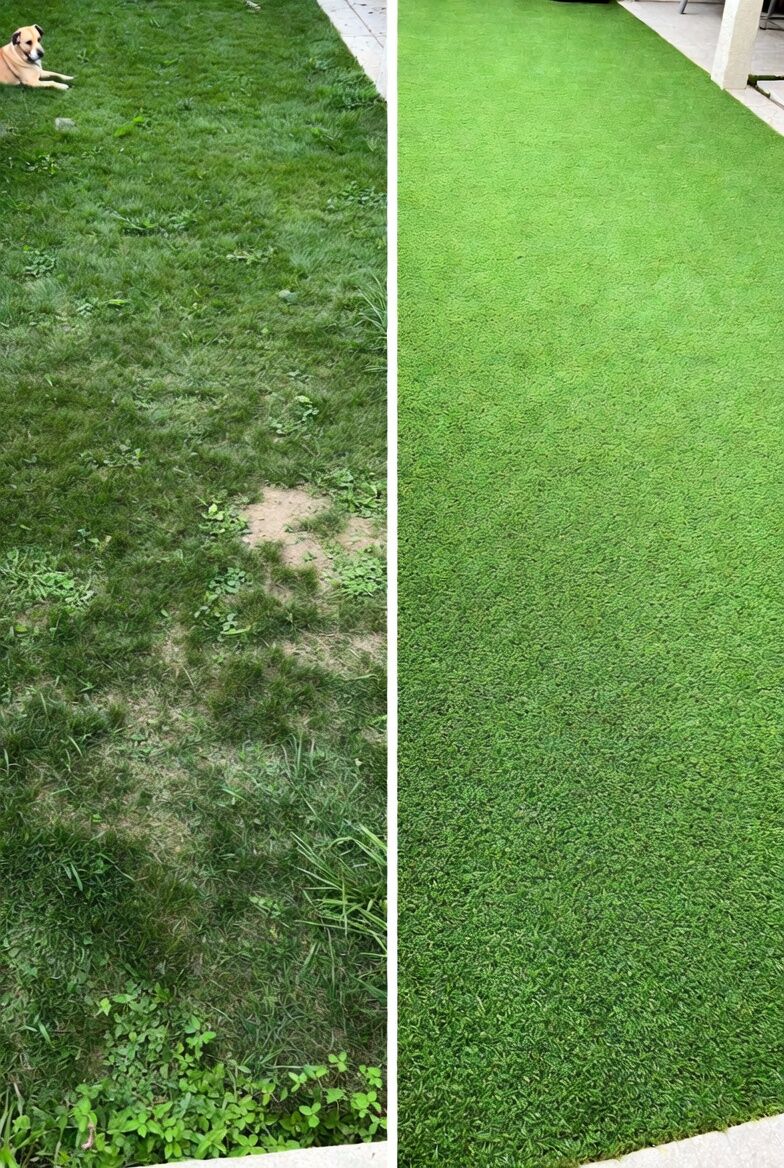
If you have a dog and a yard in metro Atlanta, you already know the cycle. Bermuda or fescue dies in the urine spots. Red Georgia clay turns into a paw-tracked mud kitchen every time it rains. You re-seed in April and by July it's burned out. You think about turf, but every other website tells you it's perfect with no downsides — and that's not true either. So here's an honest 2026 walkthrough of what artificial turf actually does for a dog yard in our climate, where it falls short, what specs to insist on, and what it really costs. We've installed pet turf at more than a thousand homes from Kennesaw down to Newnan and east to Lawrenceville, and the pattern is the same everywhere: it works very well when it's specified and installed right, and it's a disappointment when it isn't.
This guide is written for Atlanta-specific conditions: red clay subsoil, 90F+ summers with full sun in many backyards, heavy spring and fall rain bursts, and the particular pet ownership culture in north Georgia — usually one to three dogs, sometimes with a kid or two in the same yard. If you're elsewhere in the country, most of this still applies, but the heat and clay sections are written for us.
Why So Many Atlanta Dog Owners Are Switching from Grass to Turf
Natural grass and active dogs do not coexist in Georgia. The math is brutal: a 40-pound dog produces enough concentrated urine nitrogen to kill a fescue patch in a single deposit. Multiply by daily use, multiply by Atlanta humidity, and the lawn is gone by midsummer. Homeowners we work with typically reach the breaking point after one of three things: the third re-sod in two years, a vet bill for a parasite picked up out of muddy grass, or a family member who can't take the smell anymore.
Pet turf doesn't have these failure modes. There's nothing to kill, nothing to wash out into the storm drain, and nothing for bacteria to colonize the way they colonize organic soil. The trade-offs are different — higher upfront cost, heat in full sun, an installation that you can't DIY well — but the day-to-day life is dramatically different.
Why Turf Beats Grass for Dogs in Atlanta's Climate Specifically
A few things are unique to our market:
- Red Georgia clay drains poorly. Grass over clay holds urine close to the surface for hours. Pet turf installed over a proper crushed-stone base drains in seconds, regardless of what's underneath.
- Long humid summers grow bacteria. Warm, wet, organic soil is a petri dish. Inorganic turf surfaces don't support that growth.
- Rain comes in bursts. A pop-up Atlanta thunderstorm turns a dog-trafficked lawn into mud in 15 minutes. Turf is walkable within a minute of the same storm ending.
- Pollen counts are brutal. Dogs with grass-pollen allergies (more common than you'd think) often have noticeably better symptoms after a yard is converted.
How Antimicrobial Backing and Drainage Actually Work
The single most important thing to understand about pet turf is that it is a two-layer system: the turf itself sits on a permeable backing, and the backing sits on a graded crushed-stone base. Urine doesn't sit on top — it passes through.
Quality pet-grade backing is rated for at least 30 inches of water per hour. For context, the worst Atlanta thunderstorms top out around 3 inches per hour. The backing is also antimicrobial: it has a treatment integrated into the polyurethane or polypropylene that suppresses bacteria growth where the liquid passes. This is the difference between a yard that smells fine after two years and one that you can smell from the deck.
If an installer can't tell you the drainage rate and the antimicrobial chemistry on the product they're proposing, that's a flag. The good products have spec sheets and warranties on both.
Managing Urine Odor: What Works, What's Marketing
Odor management is the question we get asked the most. Here's what actually works and what's overhyped:
- Hose-down rinses (works): A 60-second rinse with a regular garden hose, once a week in a heavy-use yard, dilutes any concentrated areas. This is the single most effective maintenance step.
- Zeolite infill (works): Zeolite is a natural mineral that binds ammonia at the molecular level. Spread between the turf blades as infill, it neutralizes urine odor at the source. Costs a bit more than plain silica sand and is worth it for dog yards.
- Enzymatic cleaners (works, occasional use): A pet-safe enzymatic spray once a month or after a heat wave breaks down any residue the rinses didn't.
- "Self-cleaning" turf claims (marketing): No turf is self-cleaning. You still pick up solid waste daily and rinse weekly. Don't pay extra for the buzzword.
- Deodorizer granules sold by big-box stores (mostly marketing): They mask odor short-term and clog drainage long-term. Skip them.
The Atlanta Heat Question: Will My Dog Burn Their Paws?
This is the most legitimate concern, and most websites lie about it. Honest answer: yes, dark-blade turf in full Atlanta sun on a 95F day will reach 140-150F surface temperature, which is too hot for sustained dog contact. Asphalt next to it reaches 160F, for reference.
Three things keep heat under control:
- Light-blade options. Newer pet turf lines use lighter green or olive-blade colors that run 15-25 degrees cooler than the deep dark green options. Visually they look great. Ask for the cool-blade or heat-block variant — almost every major manufacturer has one in 2026.
- Shade. Most Atlanta backyards have at least afternoon shade from trees, fence lines, or houses. Surface temps in shade stay within a few degrees of air temperature.
- A 30-second pre-play hose-down. Wets the blades, evaporative cooling drops surface temp by 30-40 degrees for 20-30 minutes.
If your dog spends all day outside in full sun in July, build in a shaded zone — pergola, canopy, or a strategic tree — and consider light-blade turf. That's the honest answer.
The Specs That Actually Matter: A Pet Turf Buying Checklist
| Spec | Target for Dog Yards | Why It Matters |
|---|---|---|
| Face Weight | 60-80 oz/sq yd | Direct measure of how much yarn is in the turf. Heavier = more durable under paw traffic. |
| Pile Height | 1.25-1.75 inches | Tall enough to look natural, short enough to clean easily. Avoid 2"+ for dog use — solid waste hides. |
| Drainage Rate | 30+ in/hr through backing | Far above any Atlanta rain event. Liquid is gone in seconds. |
| Backing Treatment | Antimicrobial polyurethane | Built-in odor control at the layer where urine actually sits. |
| UV Stabilization | 10+ year warranty against fading | Georgia sun is intense. Cheap turf goes gray in 4-5 years. |
| Infill | Zeolite or antimicrobial silica | Zeolite binds ammonia. Plain crumb rubber is fine for sports, wrong choice for pet yards. |
| Blade Color | Light or two-tone green | Lower surface temp in full sun, more natural look year-round. |
Installation: The Part That Makes or Breaks the Yard
You can buy the best turf on the market and still have a bad yard if the installation is wrong. The installation is what fails first, almost every time we get called out to fix someone else's job.
Base Depth and Composition
For an Atlanta pet yard over red clay, the base layer should be 3 to 4 inches of compacted crushed stone — typically a mix of #57 stone and decomposed granite or stone dust. This is non-negotiable. Anything thinner over our clay traps liquid and shifts. Anything without the fines (the dust component) won't compact and won't hold its grade.
Grade and Slope
A 1-2% slope away from the house is enough. The base does the heavy lifting on drainage; the slope is insurance for very heavy rain events and to keep water off any structure.
Seams and Perimeter
Seams are glued with outdoor seam adhesive and stitched with seaming tape. The perimeter is anchored with 6-inch nails into a treated-wood bender board or aluminum edging. Dogs almost never lift correctly installed turf — they lift the cheap stapled installs.
Infill Brushed In, Not Just Dropped
Infill needs to be dropped, brushed in with a power brush, and then dropped again. The cheap installers drop and walk. The result looks fine on day one and matters two years in, when the blades have laid down and the infill has migrated.
Common Mistakes Atlanta Dog Owners Make
- Choosing the cheapest installer. The labor is more than half the project. A 20% labor savings buys you stapled seams and shallow base — and a rip-out in five years.
- Going dark green for "richer color." Looks great in October, dangerously hot in July. Light blade with a green-thatch underlayer looks better year-round and stays cooler.
- Skipping zeolite infill to save $200. Pays for itself the first time a guest doesn't smell anything in July.
- Putting it directly over old grass or soil. Always fails. The base must be excavated and rebuilt with stone.
- Not securing the perimeter. Dogs find one loose edge and the project unwinds from there.
- Pressure-washing on high. Garden hose is correct. Pressure-washer on high strips infill.
- Forgetting kids share the yard. If a child crawls or plays barefoot on the yard, ask specifically about heat ratings and lead-free certification. Reputable turf for residential use is lead-free; budget commercial turf is not always.
What It Costs in Metro Atlanta: Honest 2026 Numbers
Professionally installed pet turf in metro Atlanta typically runs $9 to $18 per square foot, all-in. Most residential dog yards land between $12 and $15 per square foot. A 600 sq ft dog area is usually $7,200 to $9,000 installed. Where do the price ranges come from?
- Lower end ($9-11/sqft): Larger, straightforward yards (1000+ sq ft), simple rectangular shape, easy access, no tear-out of existing hardscape.
- Middle ($12-15/sqft): Typical residential pet yard. Some tear-out, normal access, premium pet-grade turf, zeolite infill.
- Higher end ($16-18/sqft): Small yards (under 400 sq ft) where fixed costs dominate, difficult access, premium two-tone turf, drainage augmentation under heavy clay, or integration with hardscape features.
Anyone quoting under $8/sqft installed is cutting somewhere — usually the base depth, the seaming method, or the turf grade. Anyone quoting over $20/sqft for a standard residential pet yard is either including hardscape, designing a very high-end build, or charging tourist prices.
Maintenance Routine That Actually Works
- Daily: Pick up solid waste. Same as you would with grass, takes 60 seconds.
- Weekly: Garden-hose rinse of the high-use zones. 2-3 minutes.
- Monthly: Stiff-broom or power-broom brush against the blade direction to keep fibers upright. Check infill levels in heavy-traffic spots.
- Quarterly: Pet-safe enzymatic cleaner spray, especially in heat. Top up infill if migration is visible.
- Annually: Walk the perimeter and check seams and edging. Tighten anything loose before it becomes a tear.
How Long Pet Turf Lasts in a Real Dog Yard
Quality pet turf installed correctly should give you 15 years of use, even with multiple large dogs. We have installations from 2011 still in active dog-yard service with no replacement. The high-traffic line from back door to favorite tree wears first — that's normal — and can be re-infilled and brushed back to life. The base layer, if built right, will outlast the turf entirely. When the turf eventually wears out, the next install is a fraction of the original because the base stays.
Frequently Asked Questions
Does pet turf get too hot for dogs in Atlanta summers?
In direct full sun on a 95F day, dark-blade turf can reach 140-150F on the surface, which is too hot for sustained paw contact. Light-color blade options, partial shade, and a quick hose-down before play keep surface temps in a safe range. Most Atlanta dog yards have at least some afternoon shade, which solves the bulk of the heat issue.
Will dog urine ruin artificial turf or make it smell?
Quality pet turf has antimicrobial backing and a high-flow drainage layer that lets urine pass straight through to the base instead of pooling. With a weekly rinse, properly installed pet turf does not develop the ammonia smell that natural grass yards do. Cheap turf without these features will hold odor.
How much does pet turf cost installed in metro Atlanta?
Honest range for professionally installed pet turf in metro Atlanta is $9 to $18 per square foot, all-in. Smaller pet runs come in higher per-foot because of fixed setup costs. Most residential dog yards land between $12 and $15 per square foot.
Will my dog still try to dig through artificial turf?
Some dogs will scratch at the surface, especially over a familiar dig spot. Properly secured turf with glued seams and aluminum or treated-wood perimeter edging holds up. Dogs almost never break through the turf and base when both are installed correctly, and most dogs lose interest in digging once there's nothing to dig in.
What pet turf specs should I ask the installer for?
Ask for: face weight of 60-80 oz/sq yd, pile height between 1.25 and 1.75 inches, permeable backing rated 30+ inches per hour drainage, UV-stabilized fibers with a 10+ year warranty, and antimicrobial treatment in the backing. For infill, zeolite or antimicrobial-coated silica sand is standard for dog yards.
How long does pet turf actually last with heavy dog use?
With a quality product and proper installation, 15 years is a realistic lifespan even with multiple large dogs. Worn high-traffic spots can be patched or re-infilled. The base layer, if built right, can outlast the turf and accept a replacement panel later.
Is pet turf safe for puppies and dogs with allergies?
Yes. Quality pet turf is non-toxic, lead-free, and uses pet-safe infill like antimicrobial silica or zeolite. Dogs with grass or pollen allergies often do better on turf because there's no pollen-producing vegetation and no chemical lawn treatments. Always confirm any infill or adhesive used is pet-rated before signing.
Ready to Talk About a Dog Yard That Works?
We've installed pet turf at more than a thousand Atlanta-area homes. Free on-site walkthrough, honest specs, no high-pressure sales. Talk directly to the installer.
Call 706-701-8873 Get a Free QuoteRelated reading on our site: the main pet turf service page, our guide for large-dog yards, a deep dive on the pet turf cleaning routine, and our gallery of recent dog-yard installs around metro Atlanta. Prefer to compare numbers first? Run an instant quote.