Artificial Turf Infill Types: Which is Right for Your Yard?
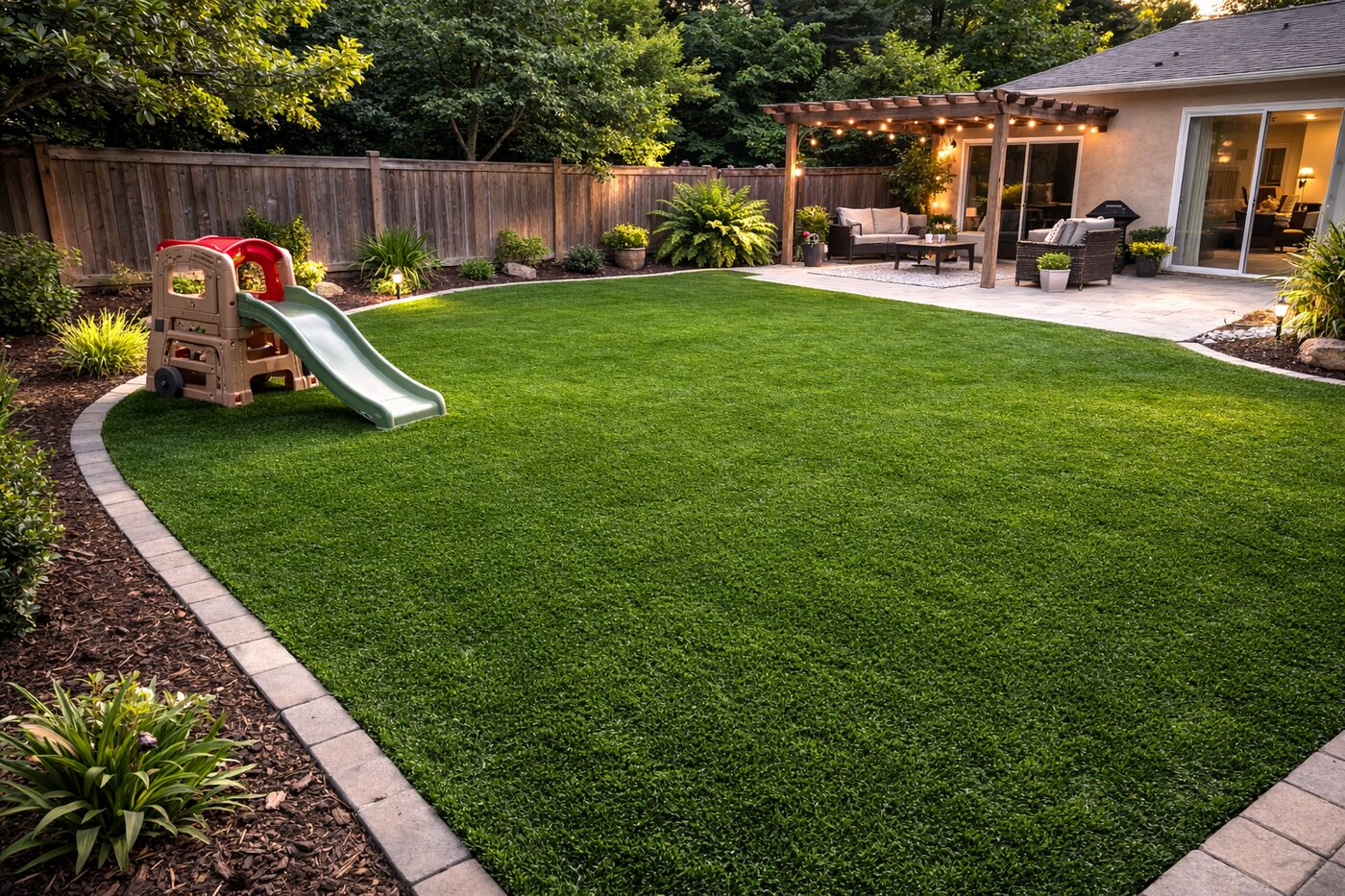
When homeowners ask about artificial turf, they focus on the visible blade—the grass-like fiber. But the real performance and longevity of an artificial turf system depends on something you never see: the infill material. In my 20+ years of turf installation throughout Georgia, I've learned that infill selection is one of the most critical decisions in a turf project. It impacts performance, safety, maintenance, environmental impact, and long-term cost. Let me break down what's available and help you understand which is right for your situation.
What is Turf Infill and Why Does It Matter?
Artificial turf fibers are essentially hollow straws. They need support to stay upright, cushioning beneath the blade, and weight to keep them in place. That's what infill does. It also affects how the turf plays, feels underfoot, drains, and maintains over time. Get the infill wrong, and your beautiful turf will perform poorly.
Sand Infill: The Industry Standard
What It Is
Silica sand is the most common infill material. It's clean, granular mineral material (typically 90-110 microns) that fills the space between turf blades. Most residential artificial turf installations in Georgia use sand infill as the primary material, though it's often combined with other materials.
Performance
Sand infill provides excellent turf support, good drainage (critical in Georgia where rainfall is substantial), and decent cushioning. For residential applications, it performs well and stands up to our climate extremes.
Maintenance
Sand infill requires occasional raking or grooming to redistribute material that migrates during heavy use or rainfall. Once or twice yearly raking keeps the turf performing optimally.
Cost
Sand is the most economical infill option. It typically adds $0.75-$1.50 per square foot to installation costs, making it ideal for budget-conscious Georgia homeowners.
Environmental Profile
Sand is environmentally neutral—inert, doesn't degrade, won't leach anything into soil or water. However, the mining of sand has its own environmental impacts. From a performance standpoint, sand-only infill is becoming less popular as hybrid systems (sand plus additives) are improving performance.
Rubber Infill: The Problematic Past
Why It Was Used
Recycled tire rubber was promoted as an environmentally friendly option—recycling waste tires. Early artificial turf systems used rubber granules as primary infill.
Performance Issues
Rubber infill seemed perfect initially but developed problems over time. The material breaks down, especially in Georgia's heat. Small particles migrate out of the turf. Tire rubber contains various compounds that can leach into soil and groundwater, creating environmental and health concerns.
Current Status
Modern turf installations rarely use rubber as primary infill anymore due to durability and environmental concerns. Most premium products moved away from it. If you have an older turf installation with rubber infill, we often recommend replacing the infill during maintenance to transition to sand or hybrid systems.
Hybrid Infill: Sand Plus Additives
What It Is
Premium installations increasingly use hybrid systems: silica sand combined with additives like TPE (thermoplastic elastomer) particles, cork, or other materials. This combines sand's stability with additives that improve cushioning and performance.
Benefits
Hybrid systems offer better shock absorption than sand alone, improved drainage characteristics, and better weight distribution. They're particularly popular for sports applications and high-traffic residential areas. At LawnLogic Turf, we often recommend hybrid systems for families with kids or active pet owners.
Cost
Hybrid infills run $1.50-$3.00 per square foot, more expensive than sand alone but delivering measurably better performance for applications where durability matters.
Environmental Considerations
Modern TPE additives are much safer than earlier rubber products. Cork and organic additives are renewable and biodegradable, though they may migrate over time in heavy-rain Georgia climates.
Organic Infills: Cork, Coconut, and Others
What They Are
The newest category of infills uses organic materials: cork granules, coconut husk fibers, walnut shells, and other plant-based materials. These are renewable, biodegradable, and don't contain synthetic chemicals.
Performance
Organic infills provide excellent cushioning and feel more "natural" underfoot. However, they break down over time (which is the point—biodegradability). In Georgia's humid climate, organic material breakdown happens faster than in drier regions. You'll need to maintain and replenish organic infill more frequently.
Cost
Organic infills are premium products, running $2.50-$4.50 per square foot for installation, with ongoing maintenance costs to replenish degrading material.
Best Applications
Organic infills work beautifully for environmentally conscious homeowners, daycare or playground applications (where safety is paramount), and properties where the superior cushioning justifies the maintenance.
Infill-Free Systems: The Emerging Option
Some newer premium turfs are designed to work without infill, relying on the base material and backing for support. These are rare and expensive, and performance data in Georgia's climate is still limited. They're not yet mainstream for residential applications.
Which Infill is Right for Your Georgia Property?
Budget Conscious
Standard sand infill delivers solid performance at the lowest cost. It works fine for most residential applications. You'll rake it occasionally, but it performs well in Georgia weather.
Family with Kids or Pets
Hybrid systems are ideal. The superior cushioning is safer for kids and provides better traction for active play. Cost is reasonable ($1.50-$3 per square foot), and performance justifies the investment.
Environmental Priority
Organic infills align with environmental values if you're willing to invest in premium product and accept higher maintenance. Alternatively, sand infill is environmentally neutral and performs well.
Sports Courts or Heavy Use
Premium hybrid or organic systems designed for sports applications. These handle the repeated impact and weight transfer of athletic use better than basic sand infill.
Maintenance and Replacement Considerations
Infill doesn't last forever. Sand eventually settles and migrates, requiring occasional replenishment. Organic materials degrade by design. Hybrid systems gradually lose additive particles. Most installations need infill maintenance every 5-10 years, depending on use intensity and climate.
Quality installations account for this in design. Proper base preparation and edge containment minimize infill migration. When maintenance time arrives, replenishing infill is far cheaper than replacing the entire turf system.
Making Your Decision
The best infill choice balances your budget, your property's use intensity, your environmental values, and Georgia's climate realities. At LawnLogic Turf, we assess each property and recommend accordingly. Budget installations use quality sand. Premium residential projects typically use hybrid systems. Sports courts and high-impact applications get specialized sports infills.
Want professional guidance on infill selection for your Georgia property? Contact us for a consultation, or explore our gallery of completed projects to see different infill systems in real installations.
Choose the Perfect Infill System
Let's select the right infill material for your Georgia artificial turf installation.
Design My Yard Free →