Artificial Turf in Shady Areas: Does It Work?
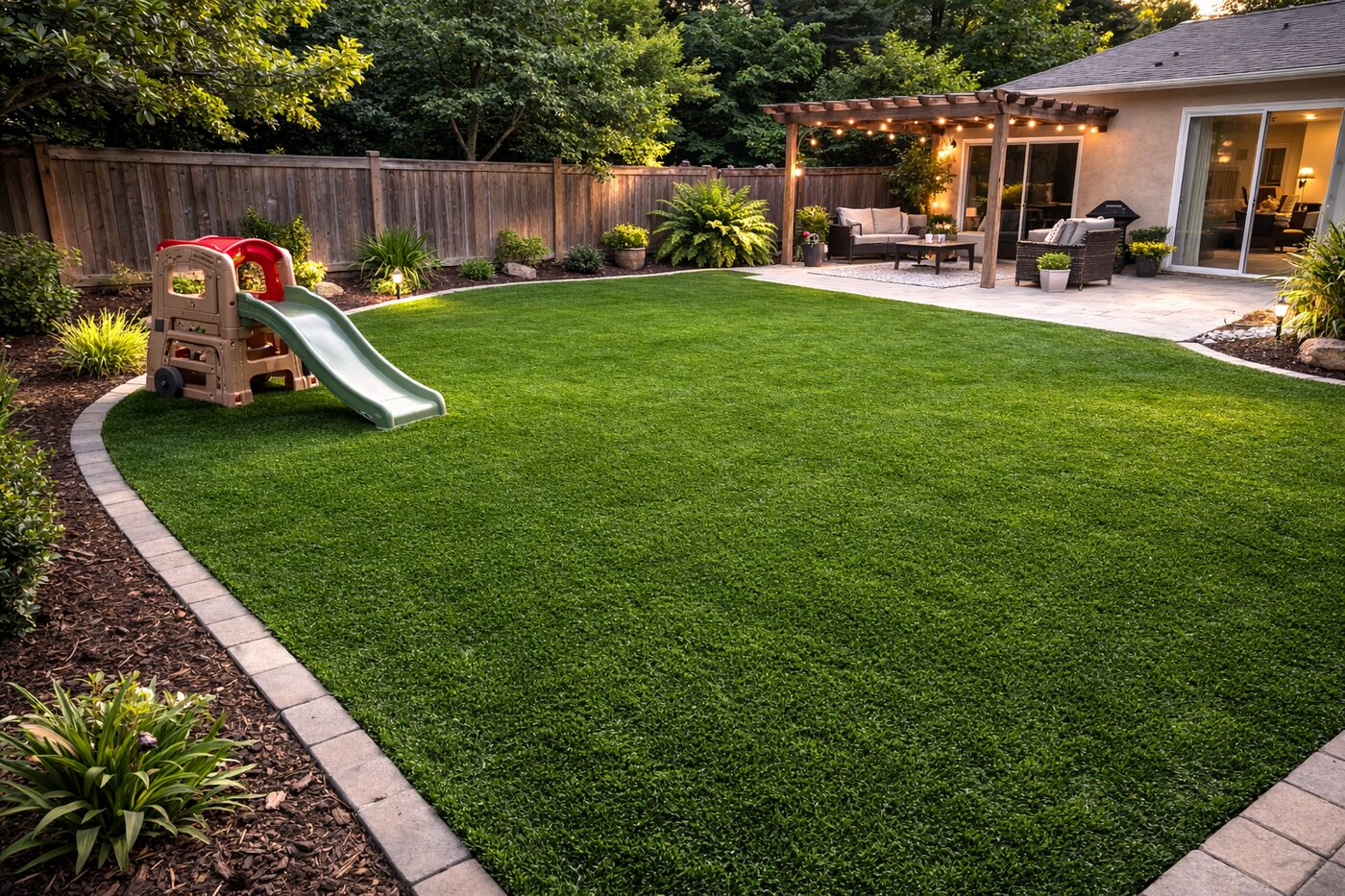
One of the best-kept secrets about artificial turf is how it performs in shade. Most people assume shade is a limitation for artificial turf, just as it is for natural grass. The opposite is true. Shade is actually one of artificial turf's greatest advantages. After 20+ years installing turf throughout Georgia—including countless shaded properties—I can tell you with confidence: if you have a shaded area killing your natural grass, artificial turf is the perfect solution.
Why Natural Grass Fails in Shade
Natural grass requires sunlight to photosynthesis and grow. Most lawn grasses need 4-6 hours of direct sunlight daily. North Georgia properties with mature tree canopy, buildings, or structures casting shade can't meet this requirement. Grass becomes thin, weak, disease-prone, and eventually dies. The deeper the shade, the faster grass fails.
Why Artificial Turf Thrives in Shade
Artificial turf doesn't need sunlight. It's a textile surface—no photosynthesis required. In shade, the turf stays green, vibrant, and consistent regardless of light conditions. This is genuinely one of the best applications for artificial turf. Shaded areas that were unusable with natural grass suddenly become beautiful, functional spaces.
Shade Levels and Turf Performance
Full Shade (Less than 2 hours direct sun)
Artificial turf performs perfectly in full shade. This is actually ideal. Without UV exposure intensity, quality turf lasts longer. Many shade environments in Georgia are under mature oaks or near buildings—turf here looks and functions beautifully with minimal fading concerns.
Partial Shade (2-4 hours direct sun)
Artificial turf excels in partial shade. It maintains perfect appearance regardless of sun exposure variation.
Dappled Shade (filtered sunlight through tree canopy)
This is ideal for artificial turf. The light filtering creates beautiful visual effects on the turf surface. It's actually more attractive than full sun installations.
Practical Shade Applications
Under Tree Canopies
North Georgia properties with beautiful mature oaks, maples, or pines cast substantial shade. These are typically considered problematic for landscaping. With artificial turf, they become opportunities to create beautiful, shaded entertaining spaces. This is one of my favorite applications.
North-Facing Slopes
Properties sloping north receive minimal direct sun. These are landscape nightmares for natural grass. Artificial turf transforms them into usable, attractive spaces.
Building Shade
Areas shaded by the home, garage, or structures are impossible for natural grass. Artificial turf converts these into functional zones—dog areas, pathways, transition spaces.
Pergola and Shade Structure Areas
Intentional shade structures (pergolas, gazebos, pavilions) create interesting entertaining spaces but kill natural grass underneath. Artificial turf under these structures creates perfect outdoor living areas with shade and green ground surface.
Drainage Advantages in Shade
Shaded areas in Georgia often have drainage challenges—water pools because evaporation is minimal and roots from shade trees intercept water. Artificial turf's drainage design handles this. Water flows through the turf surface, drains properly, and the playing surface stays usable. This solves problems that plagued natural grass installations.
Disease and Pest Prevention
Shaded, moist environments in Georgia promote fungal diseases and moss growth on natural grass. These conditions are worse in shade because poor sun exposure weakens grass resilience. Artificial turf doesn't support fungal growth. Shaded artificial turf areas stay healthy and disease-free indefinitely.
Maintenance Advantages
Shaded artificial turf requires less maintenance than sunny installations. Without UV exposure stress, the turf experiences less wear. Shade also means cooler surface temperatures and less need for specialized UV-protective products. The turf simply lasts longer with less maintenance.
Design Opportunities
Shaded spaces become design assets rather than challenges. Creating comfortable, beautiful entertaining zones under mature trees is genuinely appealing. Add seating, lighting, plantings, and fire features. Shade from trees provides natural cooling, making Georgia's summer evenings actually enjoyable outdoors.
Real Shade Application Examples
The Oak Canopy Project
A Kennesaw property had four mature oak trees creating dense shade. The area under them was completely unusable—just dead grass and bare spots. We installed artificial turf under the canopy and created a shaded lounge area with comfortable seating. The family now uses this space constantly, particularly in summer when shade is valuable. The deep green turf under the oak canopy creates a genuinely beautiful outdoor living space.
The North-Facing Slope
Another property had a north-facing slope that never got adequate sun. We installed artificial turf, creating an attractive background and functional space. Combined with retaining walls and appropriate plantings, the previously problematic slope became an asset.
Cost Perspective
Artificial turf in shade costs the same as sunny installations. However, the value proposition is different. In sun, natural grass is an option. In shade, it's not—you're paying for transformation of unusable space into functional, beautiful area. The value is substantially higher.
Making Your Shade Space Beautiful
If your Georgia property has shaded areas, artificial turf might be the perfect solution. Shade doesn't have to mean dead grass and bare spots. It can mean comfortable, beautiful entertaining spaces. Contact us to discuss shade solutions for your property. Let's transform those problematic areas into outdoor living spaces you actually use.
Transform Your Shaded Spaces
Let's create beautiful artificial turf areas under trees and in shade.
Design My Yard Free →