Best Artificial Turf for Dogs in Georgia: The Pet Owner's Guide
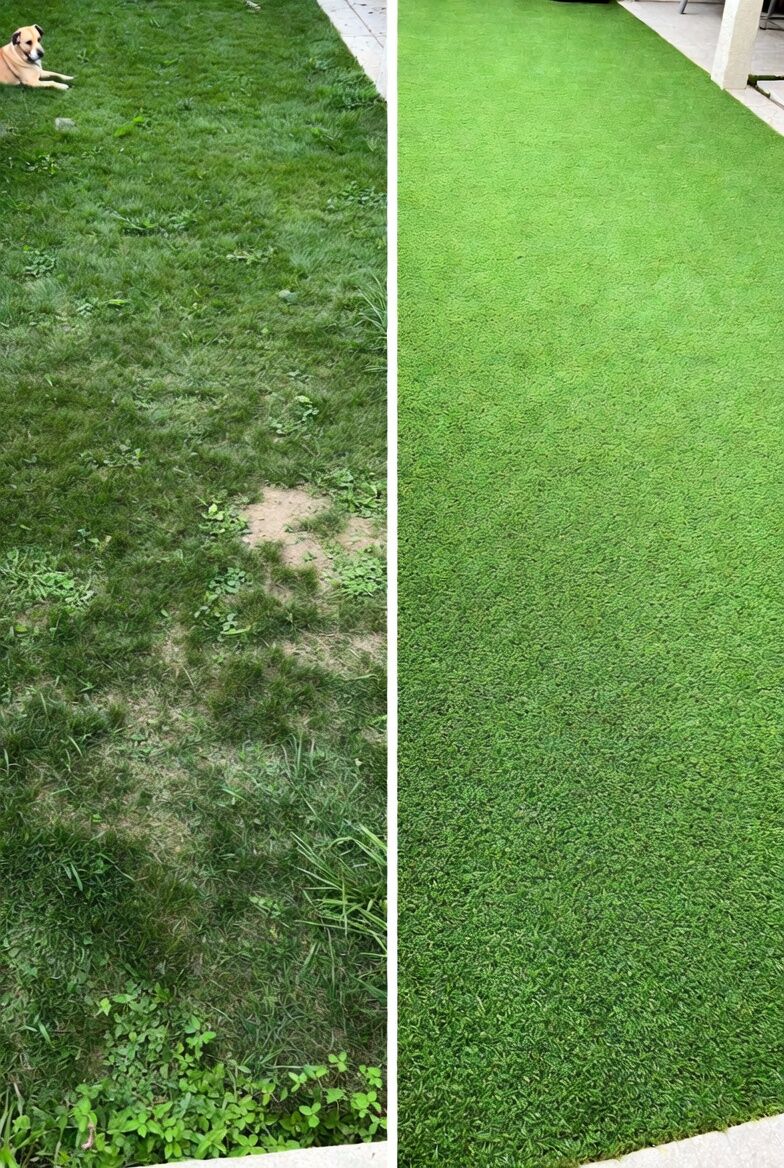
If you're a dog owner in Georgia, you know the struggle. Your pup loves playing outside, but natural grass never seems to cooperate. Either it's dead and brown, torn up by digging, muddy after rain, or creating spots where every dog's favorite bathroom activity leaves a permanent mark. After 20+ years installing turf, I've probably heard every dog-related lawn complaint there is.
Here's the good news: modern pet-friendly artificial turf has solved almost every problem that made natural grass frustrating for dog owners. In this guide, I'm going to walk you through why pet turf is game-changing, what features matter most, how to maintain it, and what to expect from a professional installation.
Why Pet Owners Are Switching to Artificial Turf in Georgia
The statistics are telling. In the past five years, I've installed pet turf at twice as many homes as we did before. Pet owners aren't making this switch on a whim—they're solving real problems.
The Natural Grass Problem with Dogs
Natural grass in Georgia already struggles with our climate. Add dogs to the mix, and it becomes nearly impossible. Here's what I typically see:
- Urine burn spots: Dog urine is highly concentrated nitrogen. It kills patches of grass, leaving brown, dead circles. These are impossible to repair quickly.
- Digging: A bored dog can destroy significant sections of lawn in minutes, creating holes and spreading dirt everywhere.
- Muddy paws: Georgia's clay soil plus dog traffic equals constant mud, especially during our wet winters.
- Worn paths: Dogs often follow the same routes, and within weeks, you'll see clear dirt paths where the grass has worn away completely.
- Odor buildup: In humidity and heat, urine odors accumulate in natural grass. Rain doesn't fully wash it away.
- Disease and parasites: Bacteria and parasites thrive in natural grass, especially in warm, moist conditions.
I've watched homeowners spend hundreds on grass repair, resodding, and treatments, only to face the same problems within weeks of their dog getting back outside. It's exhausting and expensive.
How Pet Turf Actually Solves These Problems
Superior Drainage
This is the biggest difference. Quality pet turf is specifically designed with heavy-duty, permeable backing. Unlike natural grass where urine pools on top of soil, pet turf allows liquid to drain straight through to the base layer and into ground below.
What does this mean for you? Your dog can have accidents without dead spots. Urine drains away naturally, leaving no concentrated nitrogen burning the grass. The turf stays clean and healthy indefinitely.
Odor Control
Even with good drainage, the turf fibers can hold some smell if not managed. That's why professional pet turf installations include:
- Antimicrobial backing: Built-in antimicrobial properties reduce bacterial growth and odors at the source
- Specially-formulated underlayment: This layer has enzymes or chemicals that neutralize urine odor rather than just draining it away
- Regular rinsing: Occasional water rinsing (we recommend weekly in heavy-use yards) breaks down any remaining odors
The result? Your backyard doesn't smell like a bathroom. We've had clients with three large dogs tell us their friends can't even tell dogs use the yard.
Durability and Resistance
Modern pet turf uses reinforced fibers that withstand constant paw traffic, digging, and active play. High-quality pet turf won't thin or wear away, even with daily use from large or multiple dogs.
Digging is still a concern (no surface is dog-proof), but if your dog digs, the damage is minimal and non-permanent. The turf is replaceable if needed in that spot. Compare that to natural grass, where digging creates permanent holes and dirt clouds.
Stain Resistance
Pet turf uses UV-stabilized, stain-resistant fibers. Blood, dirt, mud, paw marks—they rinse away. No permanent discoloration, no staining, no cleaning headaches.
Easy Cleanup
Here's something dog owners especially love: cleanup is incredibly simple. Solid waste sits on top of the turf and can be easily picked up with a waste bag—just like any patio. No scooping through grass blades trying to find hidden messes.
What to Look for in Pet Turf for Georgia
| Feature | Why It Matters | What to Ask For |
|---|---|---|
| Backing Material | Determines drainage speed and durability | Heavy-duty, permeable polypropylene backing |
| Face Weight | Higher weight = more durable, resists wear | Minimum 70 oz/sq yd (100+ oz for heavy use) |
| Pile Height | Taller = more comfortable, hides seams better | 1.5–2.5 inches (deeper piles feel more natural) |
| UV Stabilization | Resists Georgia's intense sun, prevents fading | UV-protected fibers rated 10+ years |
| Drainage Rate | Critical for pet yards; prevents odor and puddles | 8+ inches of water per hour drainage rate |
| Antimicrobial Infill | Reduces bacteria and odor naturally | Silica sand or antimicrobial crumb infill |
Installation Considerations for Dog Owners
Base Preparation
A proper base is critical for drainage in pet yards. Most of our best pet turf installations use a 1-2 inch base of crushed rock or engineered drainage material. This allows urine to drain completely and prevents any pooling.
Sealing and Securing Edges
Dogs don't understand that the turf has edges. They'll pull at them if given a chance. Professional installations use aluminum edging or glue to secure seams and edges so your dog can't lift or damage them.
Slope for Drainage
A slight slope (even 2-3 degrees) ensures water moves away from sitting areas. This is especially important in Georgia during our wet months.
Maintenance for Pet Turf Yards
One of the best parts? Pet turf maintenance is incredibly simple. Here's the routine:
Weekly Maintenance
- Rinse the turf with a garden hose, especially in summer
- Pick up solid waste (takes 2-3 minutes)
Monthly Maintenance
- Brush the turf with a stiff brush in one direction to keep fibers upright
- Heavy rinse if you notice any odor developing
Seasonally (2-3 times per year)
- Deep rinse with a pressure washer on low pressure
- Check for areas where infill has migrated and top up if needed
That's it. Compare that to natural grass, which requires constant watering, fertilizing, disease treatment, and resodding. Pet turf actually gives you your life back.
Real-World Pet Turf Success Stories
The Three-Dog Family (Marietta, GA)
This family had three medium-sized dogs destroying their Bermuda grass within weeks of planting. Half their yard was bare dirt, the other half was covered in dead spots. Six months after installing pet turf, their yard looks immaculate. They spend five minutes weekly on maintenance instead of hours on repairs and replacements. The kids can play outside without getting covered in mud.
The Large Dog Owner (Kennesaw, GA)
One very large dog (100+ lbs) with a passion for running laps. This dog alone wore distinct paths in natural grass. Pet turf has completely eliminated the wear-and-tear problem. The owner rinses weekly and says there's zero odor, despite having a heavy-use yard.
The Rental Property (North Atlanta, GA)
A rental with multiple tenants and rotating dogs. Landlord was spending $2,000+ annually on grass repair and resodding. Since switching to pet turf, maintenance costs dropped to $200/year, and tenant satisfaction skyrocketed. The yard now looks great year-round.
Cost of Pet Turf vs. Maintaining Natural Grass with Dogs
Pet turf isn't cheap upfront, but the math is compelling. For a typical 2,000 sq ft yard with dogs:
Artificial Pet Turf (10-year total cost)
- Installation: $20,000–30,000
- Maintenance: $100/year × 10 = $1,000
- Total: $21,000–31,000
Natural Grass with Dogs (10-year total cost)
- Initial sod: $3,000
- Resodding: $3,000 every 2 years = $15,000
- Fertilizer, treatments: $500/year × 10 = $5,000
- Water bills: $600/year × 10 = $6,000
- Your time and stress: priceless
- Total: $29,000–35,000+
Not only does pet turf often cost less, but you also get the benefit of zero yard work and a beautiful yard that your dog isn't destroying.
What About Puppies and Training?
Great question. Pet turf is actually ideal for puppies because it's easy to train on and clean up after. Since solid waste sits on top (doesn't sink into soil like natural grass), cleanup takes seconds and there's no risk of parasites or bacteria colonizing your lawn.
The drainage means accidents don't create puddles or smell. Your puppy gets a clean surface to play on, and housebreaking is actually easier since you can see exactly where accidents happen.
Will My Dog Like It?
Honestly? Most dogs love it more than natural grass. It doesn't have muddy spots, so their paws stay cleaner. It's stable underfoot for running and playing. Modern pet turf feels surprisingly natural.
We've installed it in yards with dogs ranging from tiny Chihuahuas to 120-pound German Shepherds, and owners consistently report that their dogs took to it immediately and prefer it.
Ready to Give Your Dog the Perfect Yard?
Let's talk about creating a dog-friendly artificial turf yard tailored to your pet's needs. Schedule a free consultation and see how pet turf could transform your backyard.
Get Your Free ConsultationFinal Thoughts
As a dog owner myself, I know the struggle of trying to maintain a beautiful yard while keeping your pup happy. For years, natural grass felt like an impossible choice. Either your yard looked perfect and your dog couldn't enjoy it, or your dog had fun and your yard looked like a disaster.
Pet turf removes that conflict. Your dog gets a perfect place to play, and you get a beautiful, low-maintenance yard. It's a win-win that more and more North Georgia families are discovering.
If you're tired of fighting that battle, let's talk about pet turf. We've done hundreds of dog-friendly installations and can give you specific recommendations based on your dog's size, activity level, and your yard's conditions.