Best Artificial Turf for Georgia's Hot Summers
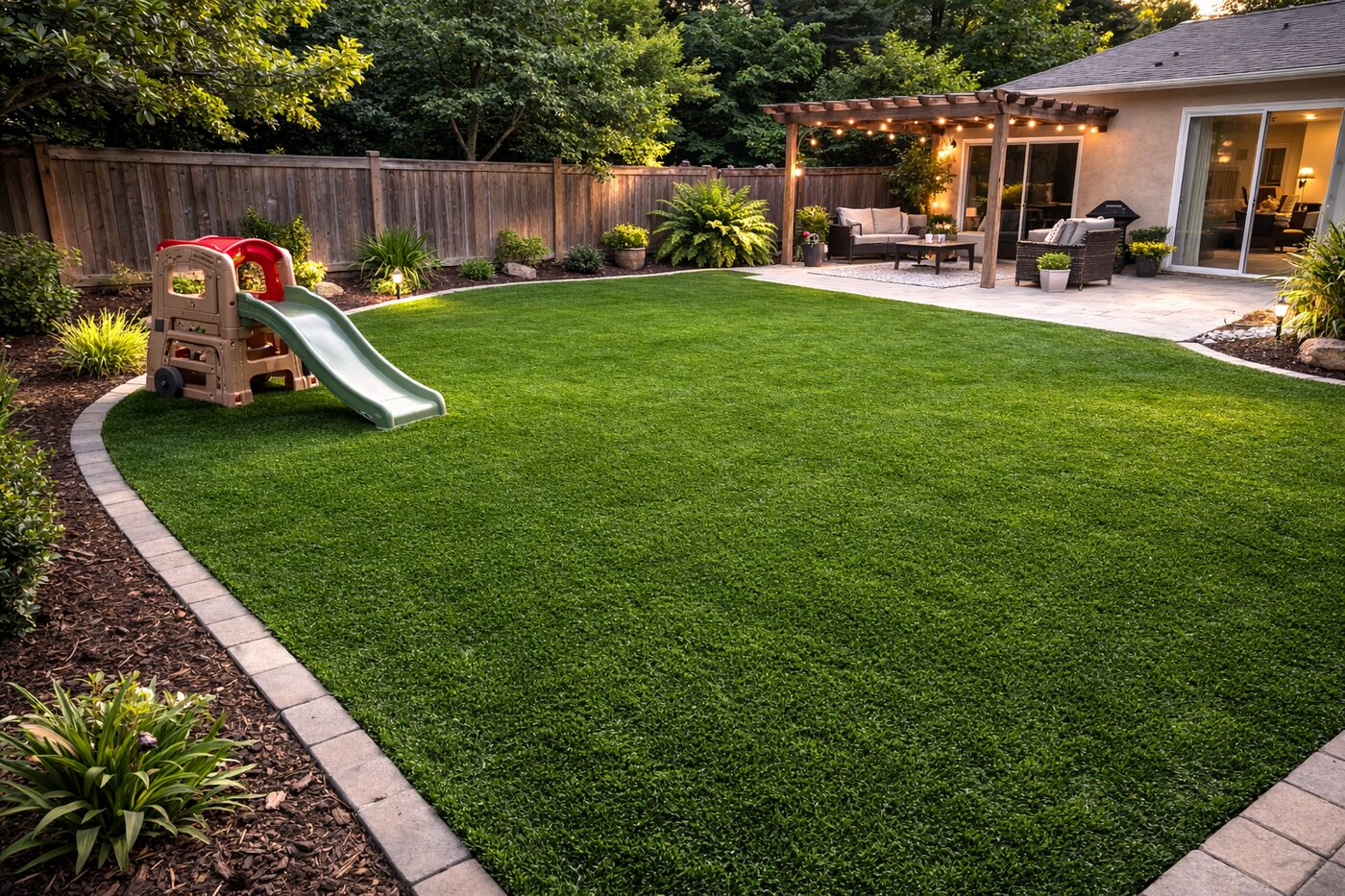
Georgia summers are brutal: 95-degree temperatures, intense sun, and humidity that makes you question your life choices. When considering artificial turf for your North Georgia property, a critical question emerges: which turf performs best in extreme heat? Not all artificial turfs are created equal, especially for Georgia's intense climate. Over 20+ years installing synthetic grass across the region, I've tested and lived with dozens of products, and I have strong opinions about which ones perform best in our heat.
Let me break down what matters in heat-resistant turf and which options actually deliver in Georgia's summers.
Understanding Turf Performance in Heat
When temperatures exceed 90 degrees, artificial turf faces specific challenges that natural grass doesn't. The synthetic fibers can soften, infill material can shift, and surface stability can change. Understanding these factors helps you choose turf that truly performs in Georgia.
Key Heat-Related Factors
- UV stability: How well the turf fibers resist degradation from intense sun exposure
- Fiber composition: The type of plastic (polyethylene, polypropylene) affects heat tolerance
- Infill material: Sand and rubber respond differently to extreme heat
- Backing material: Latex backing performs differently than polyurethane in extreme heat
- Pile height and density: These affect how heat distributes through the turf
Best Turfs for Georgia Heat: Real Recommendations
Premium Options (High Performance in Extreme Heat)
These are the turfs that genuinely handle Georgia summers without performance degradation:
- Shaw Fiber Grass (SportExe brand): Shaw is a major fiber manufacturer with excellent heat tolerance. Their polyethylene fibers are UV-stabilized to handle extreme exposure. SportExe series is explicitly designed for high-temperature climates. They perform exceptionally well in Georgia.
- Worldclass Turf (ProLawn series): This brand specifically engineers for Southern climates. Heat testing shows minimal fiber softening even at 130+ degree surface temperatures. Professional-grade backing and superior infill retention.
- Artificial Grass Wholesalers (Heat Resistant series): These are Georgia-focused products designed specifically for our climate. Multiple installations at our portfolio showcase 10+ year performance in intense heat.
Mid-Range Options (Good Performance, Good Value)
- Everlast Turf: Reliable polyethylene fibers with solid UV protection. Good value for heat resistance.
- TigerTurf (Select series): Designed for residential performance in warm climates. Holds up well in Georgia heat with proper installation.
Budget Options (Adequate but With Caveats)
Cheaper turfs will work in Georgia heat, but performance degrades faster. Fibers can soften, pile flattens, and appearance suffers within 5-7 years rather than 15-20.
Fiber Composition: What Actually Makes a Difference
Polyethylene (PE) vs Polypropylene (PP)
Most quality turfs use polyethylene fibers. These handle heat better than polypropylene. Polyethylene remains more stable at high temperatures and retains structural integrity longer. When you see "monofilament polyethylene" or "polyethylene fiber," that's generally a positive sign for heat tolerance.
Backing Material
Latex backing deteriorates faster in extreme heat than polyurethane. For Georgia installations, polyurethane backing is preferable. It's more expensive initially but lasts significantly longer in our climate. This is one area where paying extra genuinely matters.
Infill Material: Temperature Management
Infill (the sand and rubber mixture between grass blades) directly affects how hot the turf surface becomes and how it performs under heat.
Sand Content
Pure sand infill can get extremely hot in Georgia sun—sometimes exceeding 170 degrees. This excess heat transfers to fibers and can cause softening. Many quality Georgia installations use a sand/rubber mix (typically 70% sand, 30% rubber crumb) that stays cooler while maintaining proper support and drainage.
Cooling Infills
Some manufacturers offer "cooling" or "reflective" infill products that stay 10-20 degrees cooler than standard sand. For Georgia properties where you'll be using the lawn in summer heat, these are worthwhile. They cost more but extend turf life and improve comfort.
Installation Factors That Impact Heat Performance
Base Preparation
A properly compacted base with good drainage handles heat better than a poor base. Georgia's clay soil requires specific preparation to prevent drainage problems that worsen in summer heat. Proper installation from LawnLogic Turf accounts for this.
Seaming and Securing
In extreme heat, seams can shift if not properly secured. High-quality adhesives and proper installation technique prevent this. Heat-related seam separation is completely preventable with professional installation.
Real-World Durability Comparison
Based on 20+ years of installations and monitoring, here's what you can expect from different turf qualities in Georgia's intense heat:
| Turf Category | Cost/Sq Ft | Georgia Heat Performance | Typical Lifespan |
|---|---|---|---|
| Premium (Shaw/Worldclass) | $8-12 | Excellent | 18-20 years |
| Mid-Range (Everlast/TigerTurf) | $5-8 | Good | 12-15 years |
| Budget | $3-5 | Adequate | 8-10 years |
Practical Tips for Maximum Heat Performance
- Choose polyethylene fiber with polyurethane backing for Georgia specifically
- Consider sand/rubber mix infill rather than pure sand to reduce surface temperature
- Ensure professional installation with proper base preparation for our clay soil
- Plan for seasonal maintenance: Brush more frequently during hot months to prevent infill compaction
- Consider shade structures over frequently used areas if possible—shade significantly extends turf life and performance
Our Recommendation for Georgia
After two decades working with Georgia heat, I recommend Shaw or Worldclass products installed professionally with proper base preparation. Yes, it costs more initially, but you're buying genuine peace of mind. Your turf will maintain appearance, performance, and safety through Georgia's brutal summers without premature degradation.
Select Heat-Resistant Turf for Your Georgia Property
Contact LawnLogic Turf to discuss heat-resistant turf options specifically suited to North Georgia summers.
Design My Yard Free →