Build Your Dream Backyard Putting Green: A Complete Guide
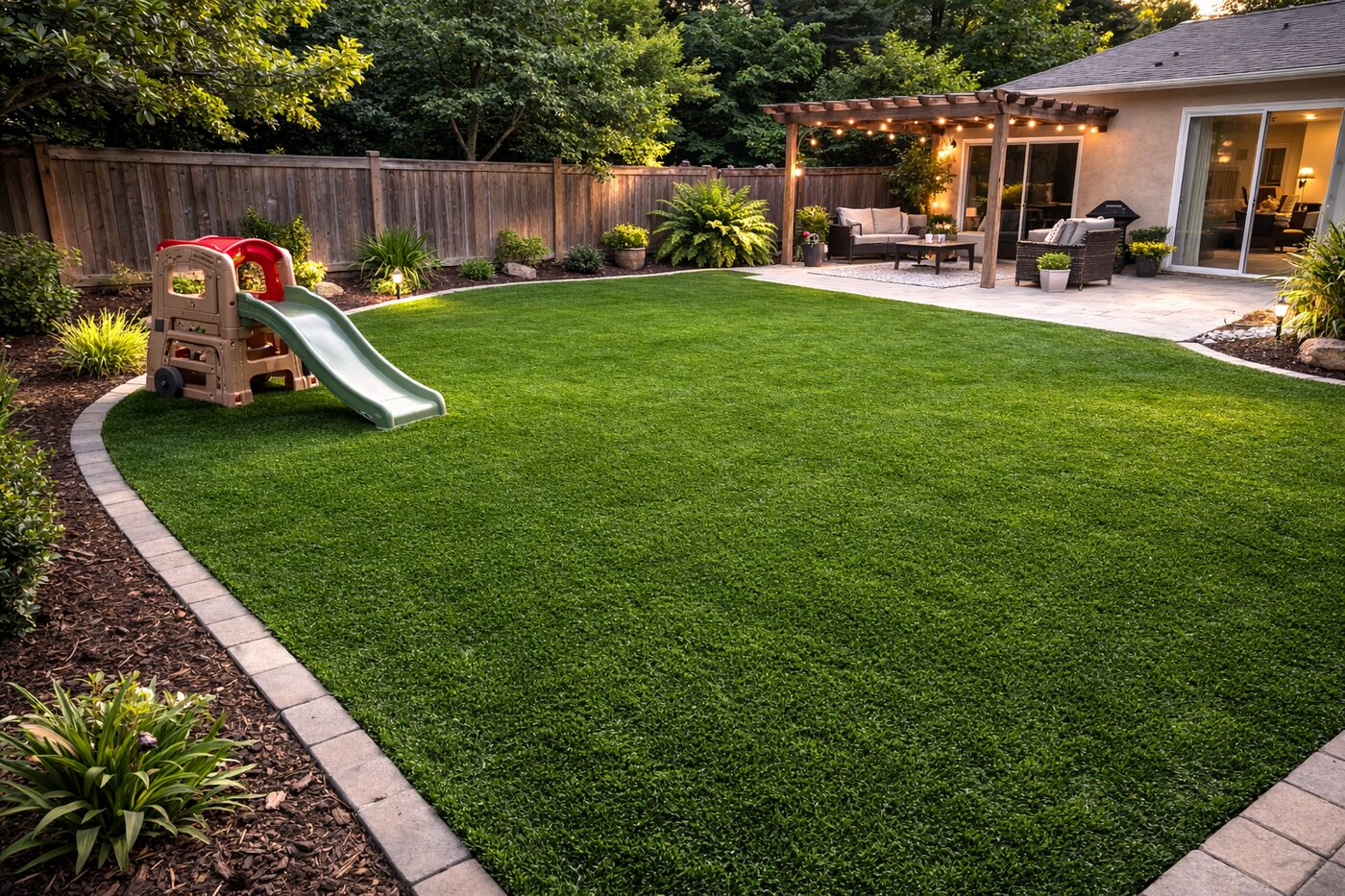
If you love golf, a backyard putting green isn't a luxury—it's practice space. Over the past two decades working with North Georgia homeowners, I've installed dozens of putting greens, and it's genuinely one of my favorite projects. There's something special about watching a golfer step outside their back door and spend 30 minutes before work practicing their short game. The beautiful thing? Modern artificial turf makes backyard putting greens realistic, affordable, and maintenance-free compared to old-school green-grass greens.
In this guide, I'll walk you through everything: design considerations, putting green specifics, installation, cost, and what makes a great Georgia putting green.
Understanding Putting Green Turf
Here's something critical: putting green turf is specialized. It's not the same as lawn turf. Putting green artificial grass is engineered to replicate the feel and roll of a real golf green. The pile height is shorter (usually 3/8" to 5/8"), the density is higher, and the backing is designed to provide specific ball roll characteristics.
Key Specifications
- Pile height: 3/8" to 5/8" (much shorter than lawn turf which is 1.5" to 2")
- Density: Higher than lawn turf for consistent ball roll
- Backing: Specialized pour-through or glue-down backing for proper ball response
- Color variations: Real putting green turf has subtle color variations for visual interest
Design Your Backyard Green
Size Considerations
You don't need a full golf course green. Here's what works well for residential installations:
- Small practice green: 400-600 sq ft. Perfect for isolated practice shots.
- Family green: 800-1,200 sq ft. Allows for 2-3 hole setups with room to walk around.
- Serious golfer green: 1,500-2,500 sq ft. Multiple hole configurations, serious practice potential.
Most Georgia homeowners go with 800-1,200 sq ft, which provides excellent practice opportunity without overwhelming the backyard.
Shape and Layout
Putting greens don't have to be perfectly rectangular. Natural curved shapes often look better. We typically design greens with:
- Gentle contours and elevation changes (if desired)
- Bunker-style features using sand or specialized materials
- 2-3 cup locations that can be changed
- Fringe area (transition zone between green and surroundings)
Installation Specifics for Georgia
Base and Slope
Putting greens require more precision than lawn installation. The base must be perfectly level or graded with intended slope (typically 1-2% for water drainage). Inconsistent base = inconsistent ball roll. We use laser leveling to ensure proper grade.
Contours and Features
If you want elevation changes in your green, we build these using compacted sand and specially shaped forms. These contours must be precise—even small variations affect ball roll dramatically.
Surface Preparation
The base layer must be ultra-compacted. We typically use a finer granite dust rather than coarser recycled asphalt. This provides better support for the specialized putting surface and ensures longevity.
Cost Breakdown for Georgia Putting Greens
Putting green installation is more expensive than lawn turf, but not dramatically so. Here's real-world pricing for a typical 1,000 sq ft residential green:
| Component | Cost | Notes |
|---|---|---|
| Site prep & grading | $1,500-2,500 | Laser level work, contour building |
| Base layer | $2,000-3,000 | Fine granite dust, compacted |
| Putting green turf | $5,000-8,000 | Specialty turf at $5-8/sq ft |
| Edging & finishing | $800-1,200 | Professional borders, drainage |
| Cup systems & accessories | $300-600 | Removable cups, pin flags |
Total typical installation: $9,600-15,300 for a 1,000 sq ft green. That's $10-15 per square foot, significantly less than many homeowners expect.
Maintenance and Care
Minimal Maintenance, Consistent Performance
This is why artificial putting greens are so practical. Unlike natural greens that require fertilizing, aerating, disease management, and constant watering, artificial greens require almost nothing:
- Brushing: Monthly brushing lifts the pile and maintains appearance.
- Debris removal: Leaf cleanup as needed.
- Rinsing: Occasional gentle rinsing clears dust.
- Ball washing: Clean your practice balls regularly to avoid marking the surface.
That's it. No chemicals, no disease management, no watering.
Performance Over Time
Quality putting green turf stays consistent for 15-20 years. The ball roll characteristics don't degrade. Unlike natural greens that get worn from foot traffic, artificial greens maintain their surface integrity indefinitely.
Real Considerations for Georgia
Heat and Sun Exposure
Our intense Georgia sun is actually ideal for putting greens—the UV-stabilized turf handles it perfectly. Unlike natural greens that brown in summer heat, artificial greens maintain perfect appearance year-round.
Rain and Drainage
Proper drainage under your green is critical. Our heavy rains require that the base and subsurface are designed for water movement. A poorly draining green becomes soggy after storms. Proper installation includes slope and drainage considerations.
Why Homeowners Love Them
Beyond the golf benefit, putting greens add property appeal and provide a unique landscape feature. They're conversation starters. They add character to a yard. And honestly, they're fun—for golfers and non-golfers alike. Families use them for games and competitions. The ROI isn't always financial (though property appeal does increase), but the lifestyle benefit is significant.
Ready to Install Your Putting Green?
LawnLogic Turf specializes in custom putting greens for North Georgia. Let's design your dream practice space.
Design My Yard Free →