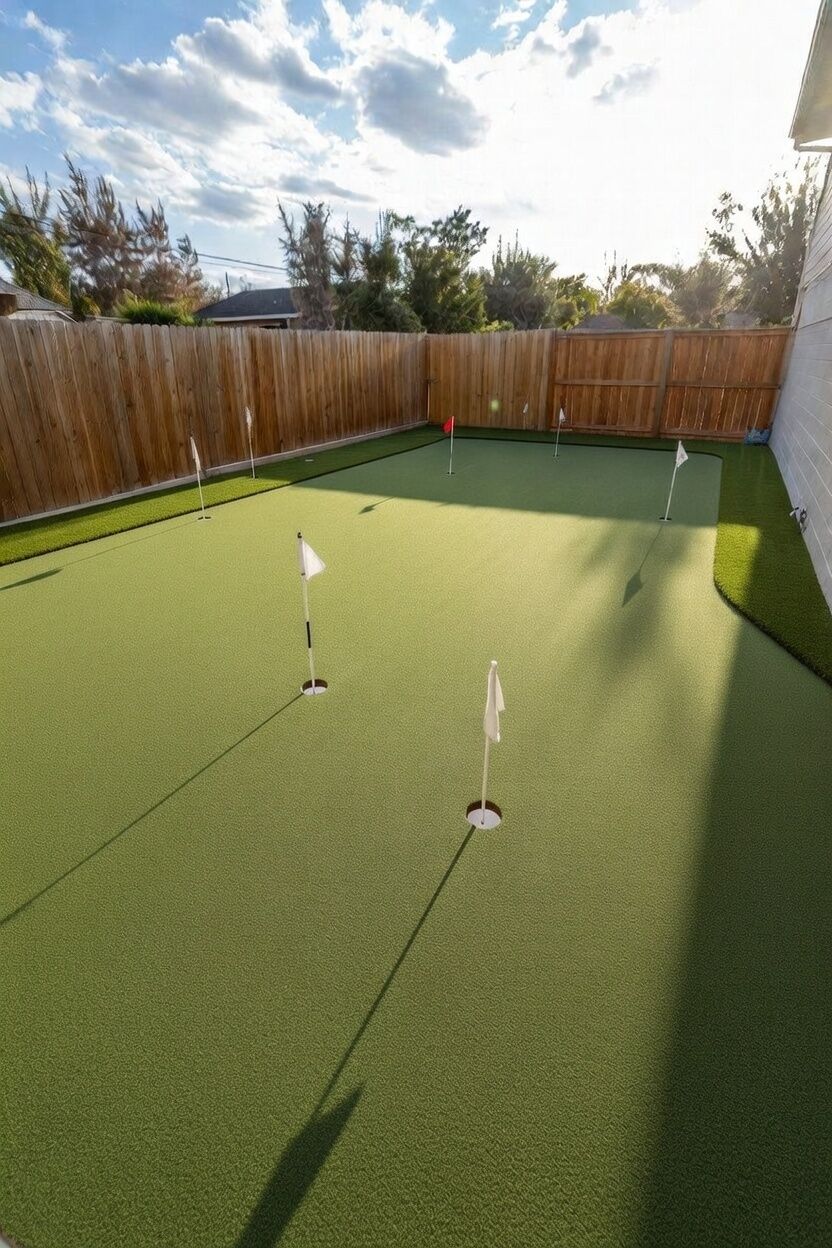
Site Clarity Through Detailed Measurement
For your Lithonia project, sketch the intended working area and note all existing features such as retaining walls, fences, and drainage paths. Take photographs from multiple angles to capture site conditions accurately. Identify access points for equipment and material delivery. Note property boundaries and any adjacent structures that might influence installation. This preparation ensures the team understands spatial constraints before beginning work.
Your Lithonia project brief
Accurate measurements and clear documentation of the site allow for precise material estimation and layout planning. Photographs help assess surface conditions and elevation changes. Access routes should be confirmed to avoid last-minute delays. Clear communication of activity zones prevents conflicts during installation. This step reduces rework and improves efficiency by grounding decisions in verified data rather than assumptions or memory.
A practical check before design
Confirm all perimeter dimensions with a measuring wheel or laser tool, photograph the site from varied vantage points including overhead angles if possible, sketch a simple layout showing access routes and fixed elements, identify gate widths and clearance paths for machinery, and verify that retained edges or surfaces match proposed installation plans before finalizing material orders.
Putting Greens Planning for Your Lithonia Project
For your Lithonia project, sketch the intended working area and note any existing features like gates, retaining walls, or adjacent structures that could affect layout. Take clear photographs from multiple angles to help visualize how the putting green integrates with surrounding surfaces. Consider where practice lines will begin and how much space is needed behind the green for follow-through. Think about access points—how will balls be retrieved and how will people move around the area? If there are retained or elevated surfaces, document their height and slope relative to the proposed green. Compare material options by asking how each affects ball roll consistency and visual harmony with adjacent hardscapes. Ask whether the design allows for future adjustments, like adding a short chip area or changing hole locations. Think about visibility and line of sight from nearby sitting or walking paths. Finally, discuss with the team how the finished space will be used daily—will it be purely for practice, or also for relaxation?
Ball roll starts below the fibers
Contours must be formed in the prepared foundation; the surface follows what is beneath it. Ask how the design balances interest with playable lines and how water leaves the green. Edges should connect cleanly with the surrounding lawn, paving or planting. A long, awkward transition can interrupt both play and maintenance. Review the proposed shape from more than one position in the yard so the practice surface fits the broader outdoor layout rather than becoming an isolated feature.
Make room for routine care
Consider how you will remove leaves, reach edges and clean the finished area. A narrow strip behind furniture may look attractive in a drawing but be awkward to maintain. Discuss the care instructions for the selected product and identify any tools or access needed. Low-maintenance materials still benefit from attention, and a practical layout can make that attention easier to provide throughout the year.
Keep performance expectations specific
A putting product is not the same surface as a general residential lawn. Talk about the intended feel and speed using samples and the team's guidance, without assuming a backyard installation duplicates a particular golf course. Leaves and debris affect play and need removal; care advice should match the selected surface. If chipping or other practice is proposed, discuss the available space and surrounding property first. Do not assume every green layout is suitable for every golf activity.
Use samples as a decision tool
Look at proposed materials beside the surfaces you intend to keep. Color, texture and transitions can read differently outside than on a screen. Samples are useful for narrowing preferences, but they do not demonstrate the base preparation or drainage beneath a finished installation. Ask both questions: how will this look in the setting, and what construction is needed for it to function as intended?
Choose the practice before the shape
A putting green should support the strokes you want to practice, rather than just fill a spare outline in the yard. Discuss whether the priority is short straight putts, changing breaks or a combination of lines. The putting-green guide describes custom contours, cup positions and fringe choices. Mark where a player stands and how others move past the green. A usable practice area needs more thought than placing a cup in the center of a patch of turf.
Related decisions in Lithonia
Use these guides to explore the interfaces around the main project. Related work is not automatically included in a quote.
Clear answers before you start
Questions worth asking
Can a putting green share the yard with other activities?
It can be considered as part of a broader layout, but the routes around it matter. Show seating, pet access and any proposed practice position during design. The green and its fringe should have a clear relationship with neighboring surfaces.
How do you verify site dimensions and conditions before installing artificial turf?
Begin by taking precise linear measurements of the area, including irregular edges and setbacks. Capture multiple photographs showing surface textures, existing obstacles, and elevation shifts. Note gate sizes and access points for equipment movement. Document retained surfaces and nearby utilities to avoid interference. This documentation supports accurate material calculations and layout decisions, minimizing unexpected adjustments during installation.
What should the putting greens proposal explain?
Ask for the working area, preparation, selected materials and the transitions to existing features. For this service, pay particular attention to practice lines and the space around the green. Confirm exclusions and any related work before comparing a final price.
How does Lithonia's location affect the design?
Lithonia is in DeKalb County. Approximately 36.5 miles southeast of Kennesaw in a straight line. Those geographic facts do not describe the ground at your address. Site access, water movement and intended use still need assessment before a design is chosen.
Let’s make a practical plan
Tell us what you want your space to do.
Bring your questions, a few photographs and a rough outline. Start with an estimate, or contact Lawn Logic Turf to discuss the next step.
Prefer to talk? (706) 701-8873
Service basis: Putting Greens guide. Coordinates: U.S. Census 2020 Gazetteer. Distances use city internal points, not road routes. Turf product reference: SGW; see LawnLogic’s published product information. The 15-Year Platinum Promise is a turf warranty; confirm applicable terms for your product and scope, not unrelated construction.