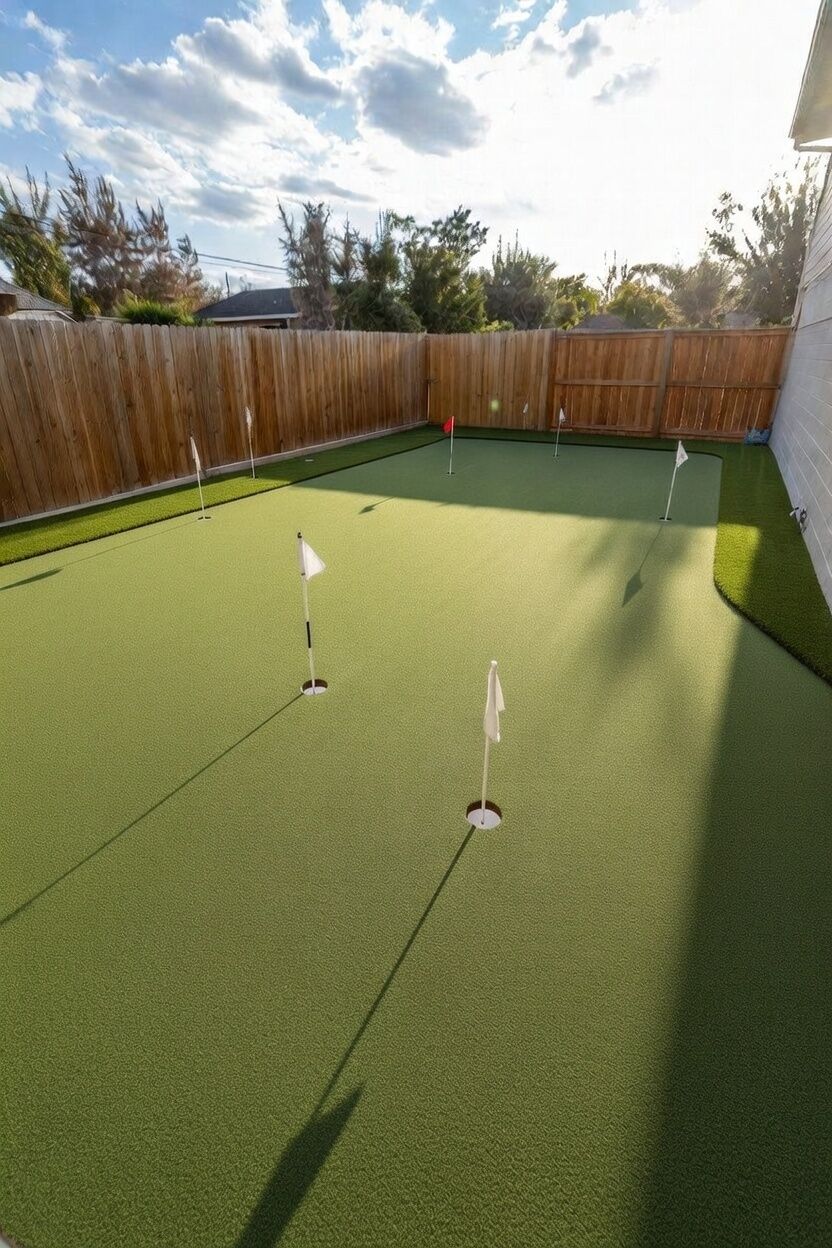
An outdoor layout example
For your project in Covington, sketch the area you want to change. Imagine a yard with a lawn for informal meals and a patio for seating. The path between the patio and lawn shows how guests might move from one space to the other. A small play zone or quiet nook could fit if it does not block that path. Use the example to identify the routes and features you want to keep on your own site.
Your Covington project brief
In that example, one option keeps the open lawn and adds shade next to the seating. Another defines a play area so there is a clear path around it. Both would preserve the patio and leave room to walk between the two areas. Try drawing both ideas on your own sketch, then compare how much room each leaves for the activities and routes you care about.
A practical check before design
Write down the exact dimensions of the area, noting any irregular shapes or slopes that could influence layout. Record the locations of doors, windows, and any fixed features that must remain in place. Mark where utilities, lighting, and drainage are situated to avoid conflicts during design. Note preferred materials, colors, or style ideas that reflect your personal taste. Prepare questions about timeline and permits.
Planning your putting green
For your project in Covington, sketch the area you want to change. Begin by describing how you intend to use the putting green and the surrounding practice area. Consider the layout, including the green’s shape, the distance between practice lines, and the surrounding width. Think about access points, such as pathways for carts or foot traffic, and how they will connect to existing driveways or walkways. Gather photos of the current area and note any obstacles that could affect placement. Ask any remaining questions. Decide whether the practice greens should be in a tight cluster or spread out to create separate training zones. Identify each green's size and the surrounding space width you plan to keep. Think about how you will access the area, including entry points, pathways, and any needed clearances for equipment. Gather recent photos of the site so you can highlight existing features, obstacles, and view lines in the meeting. Which layout feels most functional?
Choose the practice before the shape
A putting green should support the strokes you want to practice, rather than just fill a spare outline in the yard. Discuss whether the priority is short straight putts, changing breaks or a combination of lines. The putting-green guide describes custom contours, cup positions and fringe choices. Mark where a player stands and how others move past the green. A usable practice area needs more thought than placing a cup in the center of a patch of turf.
Record the existing conditions
A photograph shows appearance; a useful brief also records how the area behaves. Note the paths people repeat, the edges that collect debris and the places that stay wet. Measurements can be approximate at the first conversation. Keep observations separate from conclusions: describing a puddle is more helpful than deciding in advance that a particular product must be installed. The site visit can then test the idea against the actual property.
Ball roll starts below the fibers
Contours must be formed in the prepared foundation; the surface follows what is beneath it. Ask how the design balances interest with playable lines and how water leaves the green. Edges should connect cleanly with the surrounding lawn, paving or planting. A long, awkward transition can interrupt both play and maintenance. Review the proposed shape from more than one position in the yard so the practice surface fits the broader outdoor layout rather than becoming an isolated feature.
Keep the water route visible
Georgia clay and drainage are recurring topics in LawnLogic's service guides. A new surface does not remove the need to understand the ground beneath it. Ask how water moves across the proposed area and where it leaves. Include nearby downspouts and changes in level in your photographs. A drainage recommendation should follow the site assessment rather than an assumption that all properties in a city behave alike.
Keep performance expectations specific
A putting product is not the same surface as a general residential lawn. Talk about the intended feel and speed using samples and the team's guidance, without assuming a backyard installation duplicates a particular golf course. Leaves and debris affect play and need removal; care advice should match the selected surface. If chipping or other practice is proposed, discuss the available space and surrounding property first. Do not assume every green layout is suitable for every golf activity.
Related decisions in Covington
Use these guides to explore the interfaces around the main project. Related work is not automatically included in a quote.
Clear answers before you start
Questions worth asking
Can a putting green share the yard with other activities?
It can be considered as part of a broader layout, but the routes around it matter. Show seating, pet access and any proposed practice position during design. The green and its fringe should have a clear relationship with neighboring surfaces.
Before you meet with a design consultant, think about how you want the space to function day to day. Consider the activities you plan to host, the flow of movement, and any special requirements you may have. Identify the dimensions of the area, noting any irregular shapes, slopes, or existing structures that could affect layout. List utilities. What questions do you have about layout?
Take clear exterior photos of the whole property from several angles to show overall context. Include images of any existing structures, walls, or features that will interact with the new design. Capture pictures of entry points, driveways, and pathways to illustrate access and circulation. Document visible utilities, vents, or equipment that could affect placement or grading. These photos give the consultant a realistic view.
What should the putting greens proposal explain?
Ask for the working area, preparation, selected materials and the transitions to existing features. For this service, pay particular attention to practice lines and the space around the green. Confirm exclusions and any related work before comparing a final price.
How does Covington's location affect the design?
Covington is in Newton County. Approximately 53.0 miles southeast of Kennesaw in a straight line. Those geographic facts do not describe the ground at your address. Site access, water movement and intended use still need assessment before a design is chosen.
Let’s make a practical plan
Tell us what you want your space to do.
Bring your questions, a few photographs and a rough outline. Contact Lawn Logic Turf to discuss your project and the next step.
Prefer to talk? (706) 701-8873
Service basis: Putting Greens guide. Coordinates: U.S. Census 2020 Gazetteer. Distances use city internal points, not road routes. Turf product reference: SGW; see LawnLogic’s published product information. The 15-Year Platinum Promise is a turf warranty; confirm applicable terms for your product and scope, not unrelated construction.