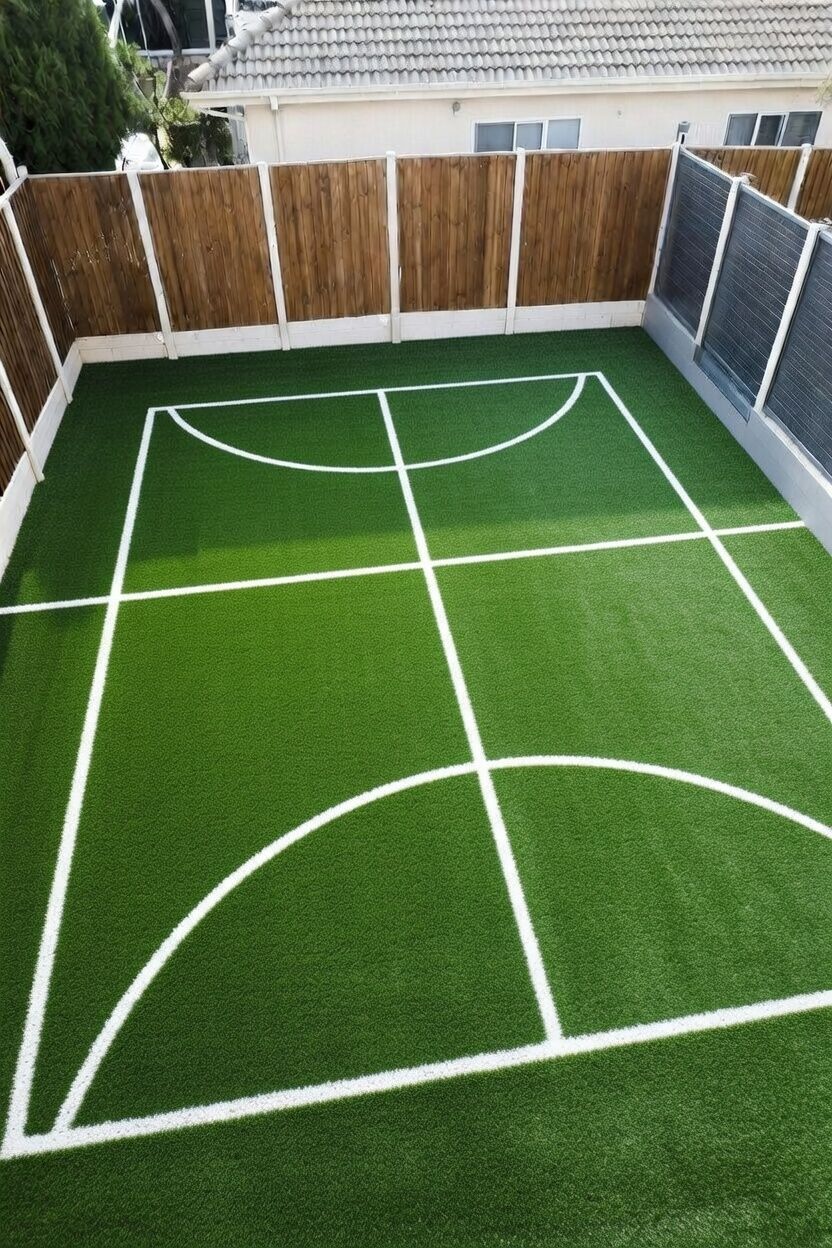
An outdoor layout example
For your project in Covington, sketch the area you want to change. Imagine a yard with a lawn for informal meals and a patio for seating. The path between the patio and lawn shows how guests might move from one space to the other. A small play zone or quiet nook could fit if it does not block that path. Use the example to identify the routes and features you want to keep on your own site.
Your Covington project brief
In that example, one option keeps the open lawn and adds shade next to the seating. Another defines a play area so there is a clear path around it. Both would preserve the patio and leave room to walk between the two areas. Try drawing both ideas on your own sketch, then compare how much room each leaves for the activities and routes you care about.
A practical check before design
Write down the exact dimensions of the area, noting any irregular shapes or slopes that could influence layout. Record the locations of doors, windows, and any fixed features that must remain in place. Mark where utilities, lighting, and drainage are situated to avoid conflicts during design. Note preferred materials, colors, or style ideas that reflect your personal taste. Prepare questions about timeline and permits.
Planning your sport court
For your project in Covington, sketch the area you want to change. Sketch a basic outline of the court on paper, including the playing area. Add the main entrance location and draw the path you will use to circulate safely. Measure the length and width you intend for the surface and compare them with standard sizes for your game. Identify any obstacles and consider how to keep walkways around the court. Gather photos of the site and list questions about access, dimensions, and circulation for your consultation. Identify the game you wish to play and picture how its court will fit within your space. Envision clear pathways that let players and guests move safely around the perimeter and between activities. Plan access points that link to existing driveways or sidewalks while preserving sight lines for supervision. Provide photos of the area and note any obstacles, slopes, or structures that could affect the layout. What layout options would give you flexibility for activities?
Name the activity before the surface
Sport courts and athletic turf cover different uses. A practice lane, agility area and ball court do not automatically need the same finish. Begin with the sport, the age and number of users, and the type of movement expected. LawnLogic's athletic service page discusses footwork, ball behavior and concentrated wear. Explain the actual activity rather than requesting a generic sports surface, and ask which construction approach fits that activity and the available footprint.
Record the existing conditions
A photograph shows appearance; a useful brief also records how the area behaves. Note the paths people repeat, the edges that collect debris and the places that stay wet. Measurements can be approximate at the first conversation. Keep observations separate from conclusions: describing a puddle is more helpful than deciding in advance that a particular product must be installed. The site visit can then test the idea against the actual property.
Keep space around the action
The playable rectangle is only part of the layout. Consider entry, equipment storage, spectators and the route back to the house. Fixed obstacles and nearby activity zones need to be visible in the plan. Do not choose a court size from a photograph or assume lines painted on a surface make it suitable for organized play. Discuss the intended use, required clearances and any product-specific requirements before committing the whole outdoor area to a single activity.
Make room for routine care
Consider how you will remove leaves, reach edges and clean the finished area. A narrow strip behind furniture may look attractive in a drawing but be awkward to maintain. Discuss the care instructions for the selected product and identify any tools or access needed. Low-maintenance materials still benefit from attention, and a practical layout can make that attention easier to provide throughout the year.
Preparation influences consistency
A suitable foundation and drainage approach support a more consistent surface. The athletic guide distinguishes performance use from a decorative lawn; compare the complete system, not only the color of the finish. Ask how edges, transitions and any equipment will be addressed. Regular debris removal and condition checks remain part of care. A proposal should identify what is included in the playing area and what is a separate decision, such as lighting, enclosures or additional equipment.
Related decisions in Covington
Use these guides to explore the interfaces around the main project. Related work is not automatically included in a quote.
Clear answers before you start
Questions worth asking
Is athletic turf the right surface for every court?
No single surface should be assumed suitable for every activity. Describe the sport and how the space will be used. Ask the team to explain the proposed surface, preparation and clearances, and identify any equipment or specialist requirements separately.
Before you meet with a design consultant, think about how you want the space to function day to day. Consider the activities you plan to host, the flow of movement, and any special requirements you may have. Identify the dimensions of the area, noting any irregular shapes, slopes, or existing structures that could affect layout. List utilities. What questions do you have about layout?
Take clear exterior photos of the whole property from several angles to show overall context. Include images of any existing structures, walls, or features that will interact with the new design. Capture pictures of entry points, driveways, and pathways to illustrate access and circulation. Document visible utilities, vents, or equipment that could affect placement or grading. These photos give the consultant a realistic view.
What should the sport courts proposal explain?
Ask for the working area, preparation, selected materials and the transitions to existing features. For this service, pay particular attention to the intended game and safe circulation around it. Confirm exclusions and any related work before comparing a final price.
How does Covington's location affect the design?
Covington is in Newton County. Approximately 53.0 miles southeast of Kennesaw in a straight line. Those geographic facts do not describe the ground at your address. Site access, water movement and intended use still need assessment before a design is chosen.
Let’s make a practical plan
Tell us what you want your space to do.
Bring your questions, a few photographs and a rough outline. Contact Lawn Logic Turf to discuss your project and the next step.
Prefer to talk? (706) 701-8873
Service basis: Sport Courts guide. Coordinates: U.S. Census 2020 Gazetteer. Distances use city internal points, not road routes. Turf product reference: SGW; see LawnLogic’s published product information. The 15-Year Platinum Promise is a turf warranty; confirm applicable terms for your product and scope, not unrelated construction.