Comparing Turf and Paved Surfaces
For your Decatur project, sketch the intended working area and note existing structures. Identify access points for equipment and material delivery. Measure all dimensions precisely and photograph current conditions from multiple angles. Note gate sizes, overhead obstructions, and nearby utilities. Consider how the space will be used daily to guide surface selection and layout. This groundwork ensures alternatives are evaluated against real constraints rather than assumptions.
Your Decatur project brief
Evaluate artificial turf against hardscape options like permeable pavers or poured concrete for your Decatur installation. Consider foot traffic patterns, durability under recurring use, and integration with adjacent surfaces. Review installation depth requirements and base preparation needs for each alternative. Assess how each option handles edge transitions, drainage paths, and aesthetic continuity with existing architecture. Compare long-term structural stability and surface-level wear characteristics across scenarios.
A practical check before design
Begin by measuring all boundaries and clearance zones for your Decatur project, including gate widths and overhead obstructions. Photograph the area from several vantage points to capture existing conditions. Sketch proposed layouts for each surface type, overlaying activity zones and access routes. Note subsurface features like retained walls or buried utilities. Compare material thickness, base requirements, and edge treatments across alternatives. Verify whether each option accommodates the intended use without compromising structural integrity or usability.
Pet Turf Planning for Your Decatur Project
For your Decatur project, sketch the intended working area and note where existing surfaces—like patios, walkways, or low retaining walls—will remain untouched. Identify all entry and exit points, including gate locations and clear access routes for equipment, to ensure smooth workflow during installation. Consider how pet traffic patterns might influence layout choices, such as positioning feeding stations or rest areas near drainage-friendly zones. Take photographs of the site from multiple angles, especially where retained features meet new surfaces, to help visualize transitions. Compare material options by asking how each performs under repeated pet use, including resistance to odor retention and ease of cleaning. Think ahead about activity zones: where will pets rest, play, or relieve themselves? Ask questions about how the design handles concentrated traffic without compromising adjacent surfaces. Focus on function: will the layout support daily routines while preserving existing structures?
Edges deserve a separate conversation
Fence lines, gates and the transition to a patio receive concentrated use. Review how the edge is secured and how it will be inspected after installation. Show any digging behavior or repeatedly worn routes rather than assuming all dogs use a yard alike. Shade, surface heat and access to drinking water remain everyday considerations in Georgia weather. A pet-turf design should support supervision and care, not be presented as a guarantee that the surface is comfortable in every condition.
Think about a hot afternoon
Georgia heat is already discussed throughout the site's turf guidance. Consider when you use the outdoor area and where shade is available. Manufactured surfaces are not a promise of cool barefoot conditions in direct sun. Discuss product choice, shade and everyday supervision where children or animals use the space. Visiting the proposed area at different times can give the design conversation better information than a single morning photograph.
Design around the animal's routine
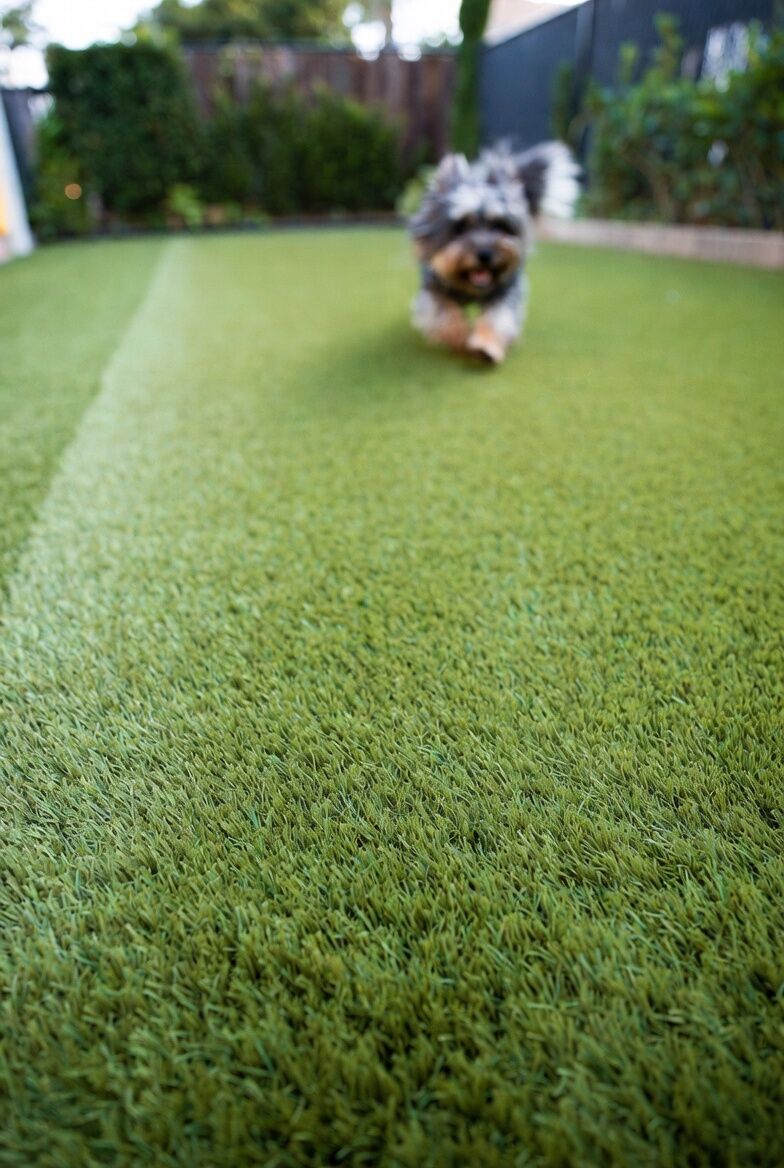
A pet run is not simply a smaller decorative lawn. Dogs often repeat the same route, turn sharply near a gate and use particular corners. Tell the team how the space is used and how often it is cleaned. The pet-turf service page describes durable backing, permeable construction and antimicrobial infill options. Product choice should follow those practical needs, with enough room for people to collect waste and reach the whole surface without awkward detours.
Use samples as a decision tool
Look at proposed materials beside the surfaces you intend to keep. Color, texture and transitions can read differently outside than on a screen. Samples are useful for narrowing preferences, but they do not demonstrate the base preparation or drainage beneath a finished installation. Ask both questions: how will this look in the setting, and what construction is needed for it to function as intended?
Odor control begins with the system
Liquid needs to pass through the surface and continue through an appropriate base. A new grass face over an unresolved wet area is not a complete drainage plan. Ask how the base, backing and infill work together and how the low edges will be handled. A cleaning route and access to rinsing water matter too. Antimicrobial components do not replace removal of solid waste or regular cleaning; keep the expected care routine part of the selection discussion.
Related decisions in Decatur
Use these guides to explore the interfaces around the main project. Related work is not automatically included in a quote.
Clear answers before you start
Questions worth asking
Does pet turf mean I can stop cleaning the yard?
No. Solid waste still needs prompt removal, and rinsing and product-appropriate cleaning remain important. Discuss the backing, infill and drainage system alongside the cleaning routine so maintenance expectations are clear before installation.
Which surface alternative better supports the intended activity patterns and structural load?
Review activity frequency and weight distribution to compare alternatives for your Decatur site. Artificial turf offers cushioning and consistent playability but may require edge containment. Pavers allow modular replacement and clear drainage but need stable subbase preparation. Concrete provides seamless transitions but demands precise leveling and expansion joints. Weigh how each option handles repeated impact, equipment movement, and daily foot traffic volume. Prioritize functional performance over visual preference when layouts overlap or access is constrained.
What should the pet turf proposal explain?
Ask for the working area, preparation, selected materials and the transitions to existing features. For this service, pay particular attention to cleanup and concentrated pet traffic. Confirm exclusions and any related work before comparing a final price.
How does Decatur's location affect the design?
Decatur is in DeKalb County. Approximately 25.5 miles southeast of Kennesaw in a straight line. Those geographic facts do not describe the ground at your address. Site access, water movement and intended use still need assessment before a design is chosen.
Let’s make a practical plan
Tell us what you want your space to do.
Bring your questions, a few photographs and a rough outline. Start with an estimate, or contact Lawn Logic Turf to discuss the next step.
Prefer to talk? (706) 701-8873
Service basis: Pet Turf guide. Coordinates: U.S. Census 2020 Gazetteer. Distances use city internal points, not road routes. Turf product reference: SGW; see LawnLogic’s published product information. The 15-Year Platinum Promise is a turf warranty; confirm applicable terms for your product and scope, not unrelated construction.