Comparing Turf and Paved Surfaces
For your Decatur project, sketch the intended working area and note existing structures. Identify access points for equipment and material delivery. Measure all dimensions precisely and photograph current conditions from multiple angles. Note gate sizes, overhead obstructions, and nearby utilities. Consider how the space will be used daily to guide surface selection and layout. This groundwork ensures alternatives are evaluated against real constraints rather than assumptions.
Your Decatur project brief
Evaluate artificial turf against hardscape options like permeable pavers or poured concrete for your Decatur installation. Consider foot traffic patterns, durability under recurring use, and integration with adjacent surfaces. Review installation depth requirements and base preparation needs for each alternative. Assess how each option handles edge transitions, drainage paths, and aesthetic continuity with existing architecture. Compare long-term structural stability and surface-level wear characteristics across scenarios.
A practical check before design
Begin by measuring all boundaries and clearance zones for your Decatur project, including gate widths and overhead obstructions. Photograph the area from several vantage points to capture existing conditions. Sketch proposed layouts for each surface type, overlaying activity zones and access routes. Note subsurface features like retained walls or buried utilities. Compare material thickness, base requirements, and edge treatments across alternatives. Verify whether each option accommodates the intended use without compromising structural integrity or usability.
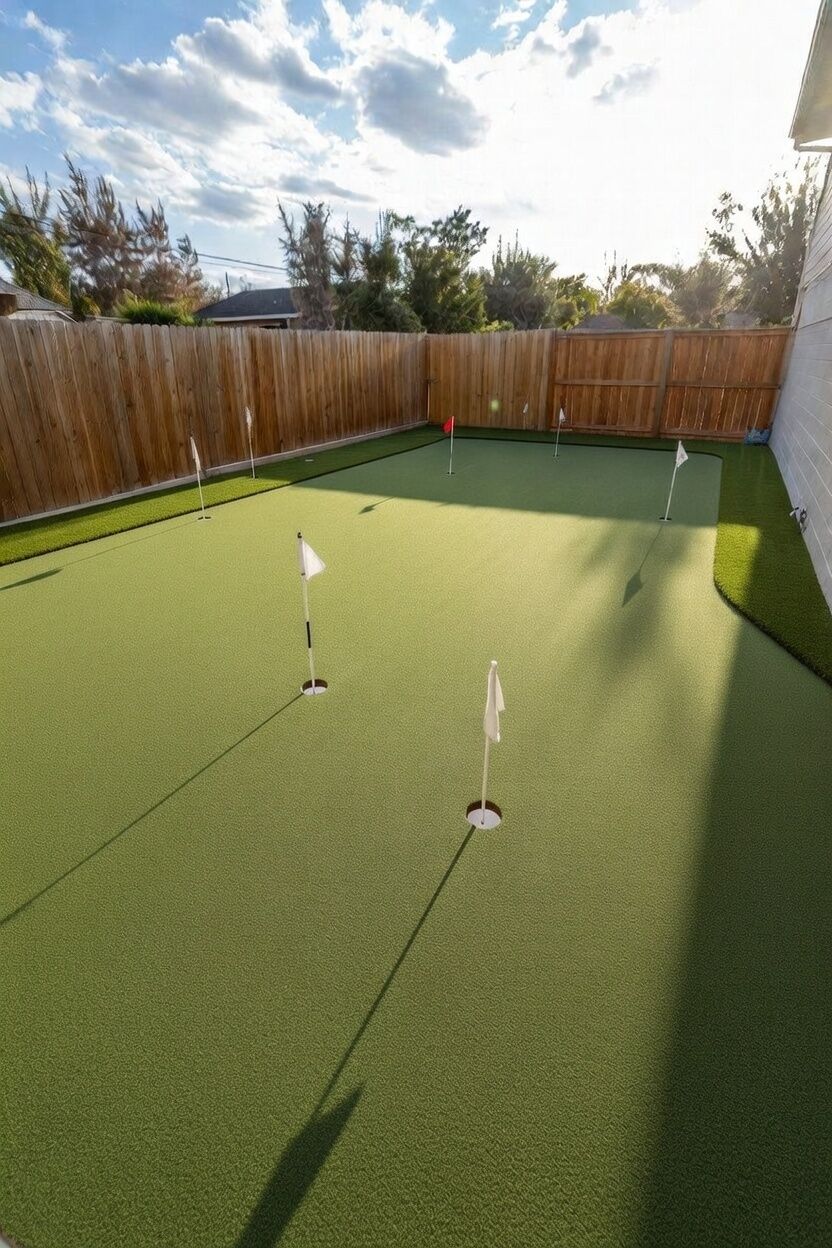
Putting Greens Planning for Decatur
For your Decatur project, sketch the intended working area and identify where practice lines and surrounding activity zones will sit relative to the green. Take photographs from multiple angles to capture how light hits the surface at different times of day. Note existing access points, gates, and retained surfaces that may influence layout or sightlines. Compare alternatives by listing how each option handles approach paths, ball return, and clearance for clubs or carts—consider whether a straight or curved approach better fits the space. Ask yourself how often the green will be used in sequence with other outdoor activities and whether the layout allows safe, unobstructed movement. Think about where spectators or equipment might naturally gather and whether the design accommodates that without compromising play. Discuss with the team how surface transitions feel underfoot and how ball speed might vary across the green based on material choices. Focus on how each design supports consistent practice rather than just appearance.
Keep performance expectations specific
A putting product is not the same surface as a general residential lawn. Talk about the intended feel and speed using samples and the team's guidance, without assuming a backyard installation duplicates a particular golf course. Leaves and debris affect play and need removal; care advice should match the selected surface. If chipping or other practice is proposed, discuss the available space and surrounding property first. Do not assume every green layout is suitable for every golf activity.
Think about a hot afternoon
Georgia heat is already discussed throughout the site's turf guidance. Consider when you use the outdoor area and where shade is available. Manufactured surfaces are not a promise of cool barefoot conditions in direct sun. Discuss product choice, shade and everyday supervision where children or animals use the space. Visiting the proposed area at different times can give the design conversation better information than a single morning photograph.
Choose the practice before the shape
A putting green should support the strokes you want to practice, rather than just fill a spare outline in the yard. Discuss whether the priority is short straight putts, changing breaks or a combination of lines. The putting-green guide describes custom contours, cup positions and fringe choices. Mark where a player stands and how others move past the green. A usable practice area needs more thought than placing a cup in the center of a patch of turf.
Explain the household schedule
A practical installation conversation includes the route you must keep using and the times access matters. Mention pets, deliveries and any shared paths before work is planned. Do not assume a general installation duration applies to your project; scope and conditions influence scheduling. Ask how the work area will be separated from normal activity and what needs to happen before it can be used again.
Ball roll starts below the fibers
Contours must be formed in the prepared foundation; the surface follows what is beneath it. Ask how the design balances interest with playable lines and how water leaves the green. Edges should connect cleanly with the surrounding lawn, paving or planting. A long, awkward transition can interrupt both play and maintenance. Review the proposed shape from more than one position in the yard so the practice surface fits the broader outdoor layout rather than becoming an isolated feature.
Related decisions in Decatur
Use these guides to explore the interfaces around the main project. Related work is not automatically included in a quote.
Clear answers before you start
Questions worth asking
Can a putting green share the yard with other activities?
It can be considered as part of a broader layout, but the routes around it matter. Show seating, pet access and any proposed practice position during design. The green and its fringe should have a clear relationship with neighboring surfaces.
Which surface alternative better supports the intended activity patterns and structural load?
Review activity frequency and weight distribution to compare alternatives for your Decatur site. Artificial turf offers cushioning and consistent playability but may require edge containment. Pavers allow modular replacement and clear drainage but need stable subbase preparation. Concrete provides seamless transitions but demands precise leveling and expansion joints. Weigh how each option handles repeated impact, equipment movement, and daily foot traffic volume. Prioritize functional performance over visual preference when layouts overlap or access is constrained.
What should the putting greens proposal explain?
Ask for the working area, preparation, selected materials and the transitions to existing features. For this service, pay particular attention to practice lines and the space around the green. Confirm exclusions and any related work before comparing a final price.
How does Decatur's location affect the design?
Decatur is in DeKalb County. Approximately 25.5 miles southeast of Kennesaw in a straight line. Those geographic facts do not describe the ground at your address. Site access, water movement and intended use still need assessment before a design is chosen.
Let’s make a practical plan
Tell us what you want your space to do.
Bring your questions, a few photographs and a rough outline. Start with an estimate, or contact Lawn Logic Turf to discuss the next step.
Prefer to talk? (706) 701-8873
Service basis: Putting Greens guide. Coordinates: U.S. Census 2020 Gazetteer. Distances use city internal points, not road routes. Turf product reference: SGW; see LawnLogic’s published product information. The 15-Year Platinum Promise is a turf warranty; confirm applicable terms for your product and scope, not unrelated construction.