Site Clarity Through Detailed Measurement
For your Lithonia project, sketch the intended working area and note all existing features such as retaining walls, fences, and drainage paths. Take photographs from multiple angles to capture site conditions accurately. Identify access points for equipment and material delivery. Note property boundaries and any adjacent structures that might influence installation. This preparation ensures the team understands spatial constraints before beginning work.
Your Lithonia project brief
Accurate measurements and clear documentation of the site allow for precise material estimation and layout planning. Photographs help assess surface conditions and elevation changes. Access routes should be confirmed to avoid last-minute delays. Clear communication of activity zones prevents conflicts during installation. This step reduces rework and improves efficiency by grounding decisions in verified data rather than assumptions or memory.
A practical check before design
Confirm all perimeter dimensions with a measuring wheel or laser tool, photograph the site from varied vantage points including overhead angles if possible, sketch a simple layout showing access routes and fixed elements, identify gate widths and clearance paths for machinery, and verify that retained edges or surfaces match proposed installation plans before finalizing material orders.
Pet Turf Planning for Your Lithonia Project
For your Lithonia project, sketch the intended working area and note where pet traffic concentrates—entry points, feeding zones, and resting spots. Take clear photographs of the space from multiple angles, especially near existing gates, fences, or retaining edges that may affect access or drainage flow. Compare surface types: existing concrete, gravel, or soil areas adjacent to where the turf will go, and consider how transitions might look and function. Think about how pets enter and exit the space, and whether access points need adjustment for convenience or safety. Ask yourself how activity zones might shift with the new surface—will play areas stay open, or will visibility change near sitting spots? Clarify exclusions by listing what won’t be included, such as removing old ground cover, relocating irrigation lines, or modifying structural features. This helps set expectations and ensures both parties understand the scope before measurements are taken or photos reviewed.
Odor control begins with the system
Liquid needs to pass through the surface and continue through an appropriate base. A new grass face over an unresolved wet area is not a complete drainage plan. Ask how the base, backing and infill work together and how the low edges will be handled. A cleaning route and access to rinsing water matter too. Antimicrobial components do not replace removal of solid waste or regular cleaning; keep the expected care routine part of the selection discussion.
Make room for routine care
Consider how you will remove leaves, reach edges and clean the finished area. A narrow strip behind furniture may look attractive in a drawing but be awkward to maintain. Discuss the care instructions for the selected product and identify any tools or access needed. Low-maintenance materials still benefit from attention, and a practical layout can make that attention easier to provide throughout the year.
Edges deserve a separate conversation
Fence lines, gates and the transition to a patio receive concentrated use. Review how the edge is secured and how it will be inspected after installation. Show any digging behavior or repeatedly worn routes rather than assuming all dogs use a yard alike. Shade, surface heat and access to drinking water remain everyday considerations in Georgia weather. A pet-turf design should support supervision and care, not be presented as a guarantee that the surface is comfortable in every condition.
Protect future options
Tell the team about later plans even if the first quote covers only one improvement. A future shade structure, cooking area or new path may affect preparation today. Ask which decisions are permanent and which can wait. Phasing works best with a defined endpoint for each stage, not an unfinished edge that is assumed to fit whatever comes next. Keep future ideas labeled as options rather than implied inclusions.
Design around the animal's routine
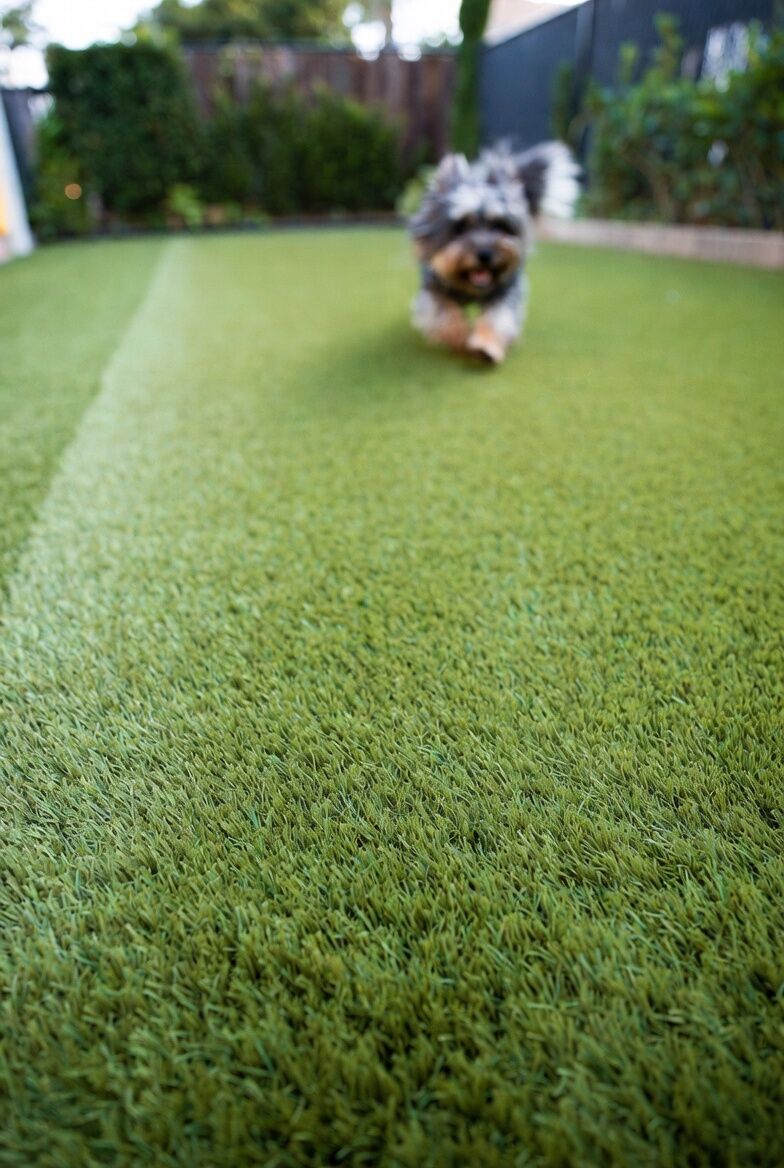
A pet run is not simply a smaller decorative lawn. Dogs often repeat the same route, turn sharply near a gate and use particular corners. Tell the team how the space is used and how often it is cleaned. The pet-turf service page describes durable backing, permeable construction and antimicrobial infill options. Product choice should follow those practical needs, with enough room for people to collect waste and reach the whole surface without awkward detours.
Related decisions in Lithonia
Use these guides to explore the interfaces around the main project. Related work is not automatically included in a quote.
Clear answers before you start
Questions worth asking
Does pet turf mean I can stop cleaning the yard?
No. Solid waste still needs prompt removal, and rinsing and product-appropriate cleaning remain important. Discuss the backing, infill and drainage system alongside the cleaning routine so maintenance expectations are clear before installation.
How do you verify site dimensions and conditions before installing artificial turf?
Begin by taking precise linear measurements of the area, including irregular edges and setbacks. Capture multiple photographs showing surface textures, existing obstacles, and elevation shifts. Note gate sizes and access points for equipment movement. Document retained surfaces and nearby utilities to avoid interference. This documentation supports accurate material calculations and layout decisions, minimizing unexpected adjustments during installation.
What should the pet turf proposal explain?
Ask for the working area, preparation, selected materials and the transitions to existing features. For this service, pay particular attention to cleanup and concentrated pet traffic. Confirm exclusions and any related work before comparing a final price.
How does Lithonia's location affect the design?
Lithonia is in DeKalb County. Approximately 36.5 miles southeast of Kennesaw in a straight line. Those geographic facts do not describe the ground at your address. Site access, water movement and intended use still need assessment before a design is chosen.
Let’s make a practical plan
Tell us what you want your space to do.
Bring your questions, a few photographs and a rough outline. Start with an estimate, or contact Lawn Logic Turf to discuss the next step.
Prefer to talk? (706) 701-8873
Service basis: Pet Turf guide. Coordinates: U.S. Census 2020 Gazetteer. Distances use city internal points, not road routes. Turf product reference: SGW; see LawnLogic’s published product information. The 15-Year Platinum Promise is a turf warranty; confirm applicable terms for your product and scope, not unrelated construction.