Give every square foot a job
A Smyrna project does not need a long feature list to be worthwhile. Start by deciding what the space must do: provide a cleaner route outside, create somewhere to sit, support practice or replace a difficult lawn. That exercise is useful at any property size. Keeping a clear primary purpose helps prevent furniture, circulation and decorative additions from competing for the same part of the design.
Your Smyrna project brief
Measure the space that remains when doors swing open and chairs are pulled out. Mark anything that cannot move, then draw one preferred activity at a realistic scale. If there are several goals, rank them rather than squeezing all of them into the first phase. Ask the team to show the tradeoffs between a generous single-purpose area and a more divided layout.
A practical check before design
Test the plan by temporarily marking the main activity area before discussing extra features. Leave doors and gates usable and imagine the furniture in place. If the route feels constrained, ask about a simpler arrangement rather than shrinking every element equally. A clearly chosen purpose gives the consultation a useful way to evaluate alternatives without assuming that more construction produces a better outdoor space.
Keep space around the action
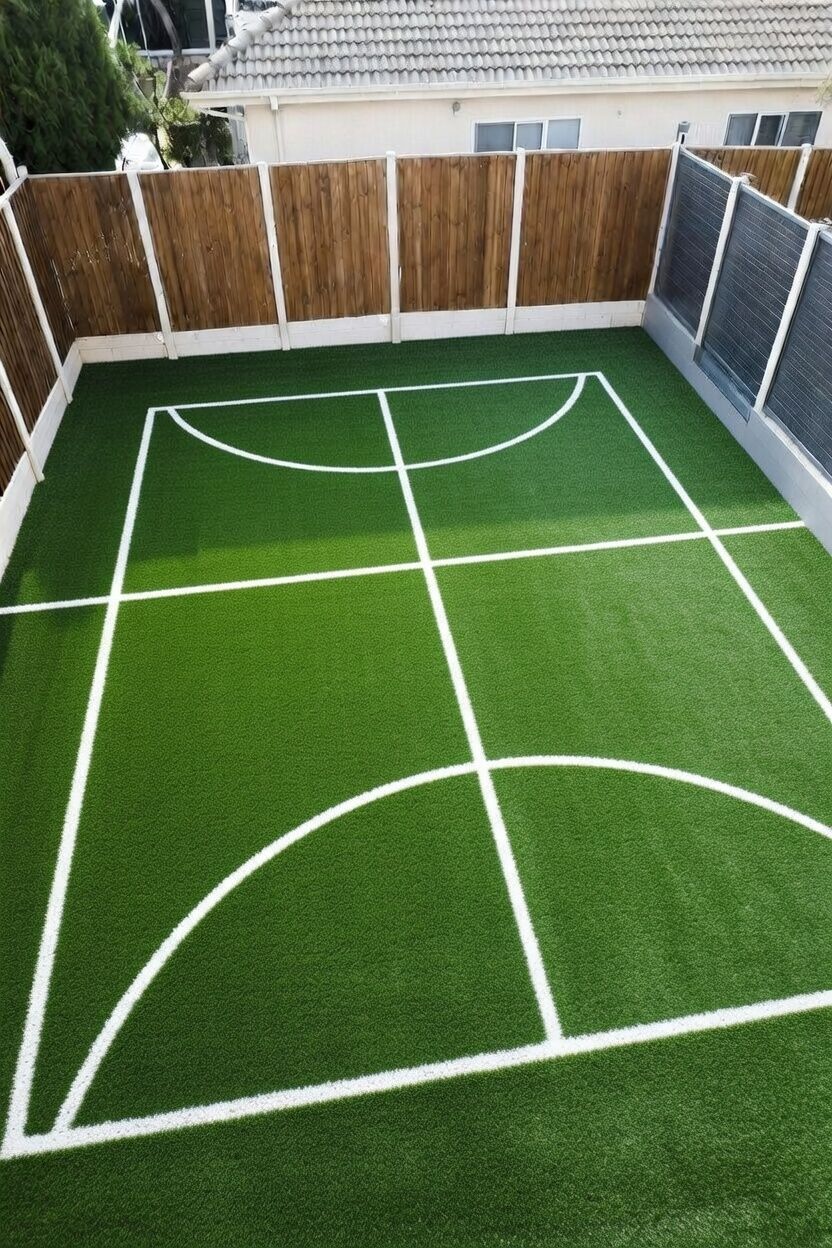
The playable rectangle is only part of the layout. Consider entry, equipment storage, spectators and the route back to the house. Fixed obstacles and nearby activity zones need to be visible in the plan. Do not choose a court size from a photograph or assume lines painted on a surface make it suitable for organized play. Discuss the intended use, required clearances and any product-specific requirements before committing the whole outdoor area to a single activity.
Protect future options
Tell the team about later plans even if the first quote covers only one improvement. A future shade structure, cooking area or new path may affect preparation today. Ask which decisions are permanent and which can wait. Phasing works best with a defined endpoint for each stage, not an unfinished edge that is assumed to fit whatever comes next. Keep future ideas labeled as options rather than implied inclusions.
Preparation influences consistency
A suitable foundation and drainage approach support a more consistent surface. The athletic guide distinguishes performance use from a decorative lawn; compare the complete system, not only the color of the finish. Ask how edges, transitions and any equipment will be addressed. Regular debris removal and condition checks remain part of care. A proposal should identify what is included in the playing area and what is a separate decision, such as lighting, enclosures or additional equipment.
Use samples as a decision tool
Look at proposed materials beside the surfaces you intend to keep. Color, texture and transitions can read differently outside than on a screen. Samples are useful for narrowing preferences, but they do not demonstrate the base preparation or drainage beneath a finished installation. Ask both questions: how will this look in the setting, and what construction is needed for it to function as intended?
Name the activity before the surface
Sport courts and athletic turf cover different uses. A practice lane, agility area and ball court do not automatically need the same finish. Begin with the sport, the age and number of users, and the type of movement expected. LawnLogic's athletic service page discusses footwork, ball behavior and concentrated wear. Explain the actual activity rather than requesting a generic sports surface, and ask which construction approach fits that activity and the available footprint.
Related decisions in Smyrna
Use these guides to explore the interfaces around the main project. Related work is not automatically included in a quote.
Clear answers before you start
Questions worth asking
Is athletic turf the right surface for every court?
No single surface should be assumed suitable for every activity. Describe the sport and how the space will be used. Ask the team to explain the proposed surface, preparation and clearances, and identify any equipment or specialist requirements separately.
How do I prioritize a Smyrna outdoor improvement?
Choose the daily frustration you most want to solve and describe a successful result in plain language. Then list optional additions separately. This makes it easier to preserve useful open space and compare a focused project with a larger redesign.
What should the sport courts proposal explain?
Ask for the working area, preparation, selected materials and the transitions to existing features. For this service, pay particular attention to the intended game and safe circulation around it. Confirm exclusions and any related work before comparing a final price.
How does Smyrna's location affect the design?
Smyrna is in Cobb County. Approximately 12.8 miles southeast of Kennesaw in a straight line. Those geographic facts do not describe the ground at your address. Site access, water movement and intended use still need assessment before a design is chosen.
Let’s make a practical plan
Tell us what you want your space to do.
Bring your questions, a few photographs and a rough outline. Start with an estimate, or contact Lawn Logic Turf to discuss the next step.
Prefer to talk? (706) 701-8873
Service basis: Sport Courts guide. Local reference: Smyrna site guide. Coordinates: U.S. Census 2020 Gazetteer. Distances use city internal points, not road routes. Turf product reference: SGW; see LawnLogic’s published product information. The 15-Year Platinum Promise is a turf warranty; confirm applicable terms for your product and scope, not unrelated construction.