Smart turf and hardscape planning for Doraville
For your Doraville project, sketch the intended working area and note existing features like trees, slopes, or structures. Measure dimensions carefully and take clear photos from multiple angles to capture how light falls and how space feels. Consider how people move through the area and where seating, play, or storage might fit. Think about proximity to doors, walkways, and driveways. This visual and spatial prep helps the team understand your goals and constraints before any site visit.
Your Doraville project brief
Begin by identifying the primary function of the space—relaxation, play, or utility—and how its layout supports that. Note where access points such as gates, steps, or pathways intersect the area. Observe existing surfaces and how they connect to adjacent zones. Gather measurements for length, width, and any irregular shapes. Snap photos of current conditions and label them if helpful. This preparation gives the team a clear starting point for discussing material options and design possibilities.
A practical check before design
During your preparation, record precise dimensions of the intended turf and hardscape zones, including any curves or angles, and note how these spaces relate to doors, walkways, and adjacent surfaces. Take well-lit photos that show both the broader layout and details like existing barriers or entry points. Consider how people move through the area and where seating or storage might fit comfortably. Observe how light falls at different times and where shadows appear, as this can influence material choice. Bring notes on your priorities, such as durability, appearance, or ease of access, to guide the conversation.
Sport Courts Planning for Your Doraville Project
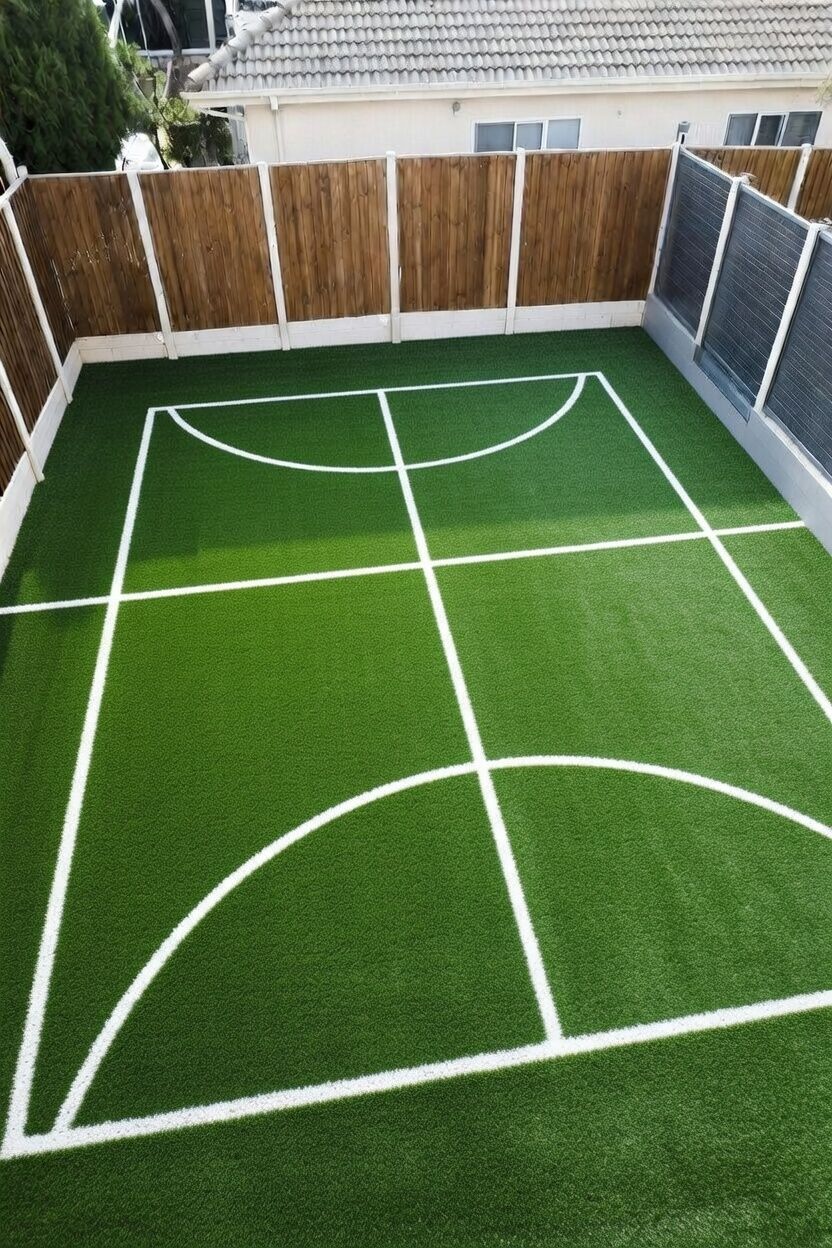
For your Doraville project, sketch the intended working area and note where people will stand, move, or pause during activity—include clear zones around the court edges for safe circulation. Take multiple photographs from different angles to capture how light falls and how the space connects to nearby structures or pathways. Consider gate placement and swing direction to avoid interference with gameplay or access. Think about how a ball might bounce off retaining walls or nearby surfaces and whether the layout supports smooth transitions between activity and rest areas. Compare material options not just by appearance but by how they perform underfoot during quick stops or directional changes. Ask yourself what unanswered questions might affect your comfort with the final design—such as how the surface feels during early-morning play or whether the court orientation minimizes glare. Share these thoughts with the team so they can tailor the consultation to your real-world use, not just theory.
Name the activity before the surface
Sport courts and athletic turf cover different uses. A practice lane, agility area and ball court do not automatically need the same finish. Begin with the sport, the age and number of users, and the type of movement expected. LawnLogic's athletic service page discusses footwork, ball behavior and concentrated wear. Explain the actual activity rather than requesting a generic sports surface, and ask which construction approach fits that activity and the available footprint.
Think about a hot afternoon
Georgia heat is already discussed throughout the site's turf guidance. Consider when you use the outdoor area and where shade is available. Manufactured surfaces are not a promise of cool barefoot conditions in direct sun. Discuss product choice, shade and everyday supervision where children or animals use the space. Visiting the proposed area at different times can give the design conversation better information than a single morning photograph.
Keep space around the action
The playable rectangle is only part of the layout. Consider entry, equipment storage, spectators and the route back to the house. Fixed obstacles and nearby activity zones need to be visible in the plan. Do not choose a court size from a photograph or assume lines painted on a surface make it suitable for organized play. Discuss the intended use, required clearances and any product-specific requirements before committing the whole outdoor area to a single activity.
Explain the household schedule
A practical installation conversation includes the route you must keep using and the times access matters. Mention pets, deliveries and any shared paths before work is planned. Do not assume a general installation duration applies to your project; scope and conditions influence scheduling. Ask how the work area will be separated from normal activity and what needs to happen before it can be used again.
Preparation influences consistency
A suitable foundation and drainage approach support a more consistent surface. The athletic guide distinguishes performance use from a decorative lawn; compare the complete system, not only the color of the finish. Ask how edges, transitions and any equipment will be addressed. Regular debris removal and condition checks remain part of care. A proposal should identify what is included in the playing area and what is a separate decision, such as lighting, enclosures or additional equipment.
Related decisions in Doraville
Use these guides to explore the interfaces around the main project. Related work is not automatically included in a quote.
Clear answers before you start
Questions worth asking
Is athletic turf the right surface for every court?
No single surface should be assumed suitable for every activity. Describe the sport and how the space will be used. Ask the team to explain the proposed surface, preparation and clearances, and identify any equipment or specialist requirements separately.
What key features should you photograph and measure before the consultation?
Before the consultation, photograph the full area from several vantage points, especially where changes are planned and where existing elements like fences, steps, or doors open. Measure perimeter lengths, gate openings, and distances to nearby structures. Include close-ups of surface conditions and transitions between materials. Note where slopes begin or change direction, and where retaining or grading may be relevant. This documentation helps the team visualize the space and ask focused questions during the session.
What should the sport courts proposal explain?
Ask for the working area, preparation, selected materials and the transitions to existing features. For this service, pay particular attention to the intended game and safe circulation around it. Confirm exclusions and any related work before comparing a final price.
How does Doraville's location affect the design?
Doraville is in DeKalb County. Approximately 21.5 miles east of Kennesaw in a straight line. Those geographic facts do not describe the ground at your address. Site access, water movement and intended use still need assessment before a design is chosen.
Let’s make a practical plan
Tell us what you want your space to do.
Bring your questions, a few photographs and a rough outline. Start with an estimate, or contact Lawn Logic Turf to discuss the next step.
Prefer to talk? (706) 701-8873
Service basis: Sport Courts guide. Coordinates: U.S. Census 2020 Gazetteer. Distances use city internal points, not road routes. Turf product reference: SGW; see LawnLogic’s published product information. The 15-Year Platinum Promise is a turf warranty; confirm applicable terms for your product and scope, not unrelated construction.