Cleaning Preparation for Artificial Turf Installations
For your Lilburn project, sketch the intended working area and note all dimensions. Identify existing surfaces that will be retained, such as concrete pads or gravel bases. Mark where gates or access points are located to ensure equipment movement is possible. Take clear photographs of the site from multiple angles before any cleaning begins. This documentation supports accurate planning and verifies surface conditions for material comparisons and layout decisions.
Your Lilburn project brief
Cleaning preparation for artificial turf installations begins with thorough site assessment and documentation. Accurate measurements and photographic records help in selecting appropriate materials and layouts. Access points and retained surfaces must be mapped to avoid conflicts during installation. Planning includes reviewing retained surfaces for stability and compatibility with turf backing. This groundwork ensures clean, efficient installation and proper adhesion or anchoring where needed.
A practical check before design
Begin by measuring the working area and sketching the layout, including all dimensions and retaining features. Take multiple photographic records of the site from varied angles to capture surface conditions. Confirm access points, including gate sizes and clear paths for equipment movement. Inspect retained surfaces for flatness and stability, ensuring they are dry and debris-free before proceeding. Document any irregularities or existing materials for reference during material selection and installation planning.
Sport Courts Planning for Lilburn Projects
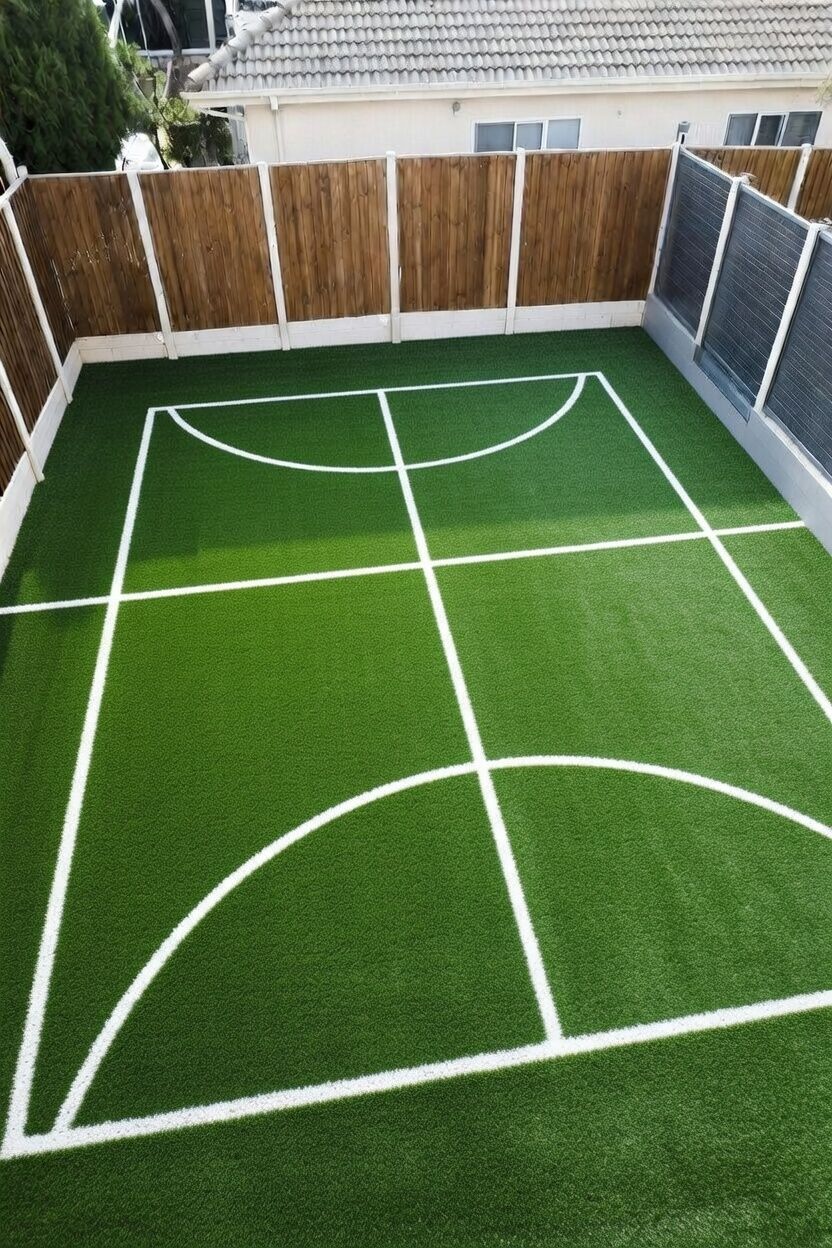
For your Lilburn project, sketch the intended working area and measure all boundaries precisely, noting existing structures, access points, and gate positions. Take clear photographs of the surface from multiple angles to assess flatness, drainage patterns, and surface texture before finalizing design options. Consider how players move around the court—walk a daily route on paper: start at the entrance, step through the approach zone, simulate a serve, follow the ball’s path, and trace the return path, noting where foot traffic naturally clusters. Ask whether the proposed layout allows safe circulation without crossing active play zones. Compare material finishes for glare, traction, and visual comfort under varying light conditions. Confirm whether retained surfaces—like borders, steps, or adjacent hardscapes—align with intended activity flow. Inquire about structural clearances above and around the court for equipment or future adjustments. Discuss how the surface interacts with surrounding elements, such as walls or fences, and whether reflections or shadows might affect gameplay. Finally, review the proposal questions to ensure all functional expectations are covered.
Preparation influences consistency
A suitable foundation and drainage approach support a more consistent surface. The athletic guide distinguishes performance use from a decorative lawn; compare the complete system, not only the color of the finish. Ask how edges, transitions and any equipment will be addressed. Regular debris removal and condition checks remain part of care. A proposal should identify what is included in the playing area and what is a separate decision, such as lighting, enclosures or additional equipment.
Compare a complete scope
Two proposals are difficult to compare when one includes preparation and the other describes only the finish. Ask what is being removed, what is being retained and how the new work meets it. Identify disposal, access protection and surface restoration where relevant. A clear list of inclusions and exclusions is more useful than a headline price without dimensions. Keep optional additions separate so the essential work remains visible.
Name the activity before the surface
Sport courts and athletic turf cover different uses. A practice lane, agility area and ball court do not automatically need the same finish. Begin with the sport, the age and number of users, and the type of movement expected. LawnLogic's athletic service page discusses footwork, ball behavior and concentrated wear. Explain the actual activity rather than requesting a generic sports surface, and ask which construction approach fits that activity and the available footprint.
Use samples as a decision tool
Look at proposed materials beside the surfaces you intend to keep. Color, texture and transitions can read differently outside than on a screen. Samples are useful for narrowing preferences, but they do not demonstrate the base preparation or drainage beneath a finished installation. Ask both questions: how will this look in the setting, and what construction is needed for it to function as intended?
Keep space around the action
The playable rectangle is only part of the layout. Consider entry, equipment storage, spectators and the route back to the house. Fixed obstacles and nearby activity zones need to be visible in the plan. Do not choose a court size from a photograph or assume lines painted on a surface make it suitable for organized play. Discuss the intended use, required clearances and any product-specific requirements before committing the whole outdoor area to a single activity.
Related decisions in Lilburn
Use these guides to explore the interfaces around the main project. Related work is not automatically included in a quote.
Clear answers before you start
Questions worth asking
Is athletic turf the right surface for every court?
No single surface should be assumed suitable for every activity. Describe the sport and how the space will be used. Ask the team to explain the proposed surface, preparation and clearances, and identify any equipment or specialist requirements separately.
How do you verify surface readiness before installing artificial turf in Lilburn?
Verify surface readiness by measuring the area precisely and confirming flatness with a long level or string line. Check for retained surfaces like compacted gravel or existing pavers to ensure they are clean, dry, and free of loose debris. Photograph the site from multiple angles to document conditions. Note gate locations and access routes for equipment. Compare material compatibility, especially for drainage layers or edge restraints, to support proper adhesion and stability during installation.
What should the sport courts proposal explain?
Ask for the working area, preparation, selected materials and the transitions to existing features. For this service, pay particular attention to the intended game and safe circulation around it. Confirm exclusions and any related work before comparing a final price.
How does Lilburn's location affect the design?
Lilburn is in Gwinnett County. Approximately 29.1 miles east of Kennesaw in a straight line. Those geographic facts do not describe the ground at your address. Site access, water movement and intended use still need assessment before a design is chosen.
Let’s make a practical plan
Tell us what you want your space to do.
Bring your questions, a few photographs and a rough outline. Start with an estimate, or contact Lawn Logic Turf to discuss the next step.
Prefer to talk? (706) 701-8873
Service basis: Sport Courts guide. Coordinates: U.S. Census 2020 Gazetteer. Distances use city internal points, not road routes. Turf product reference: SGW; see LawnLogic’s published product information. The 15-Year Platinum Promise is a turf warranty; confirm applicable terms for your product and scope, not unrelated construction.