Work from the gate inward
A finished yard is only one part of a construction plan. A Woodstock project brief should also explain how materials reach the work area and what needs protection along the way. Side gates, steps and existing paths can affect the sequence of an installation. Looking at access early makes the discussion more practical than choosing a finished look and discovering later that the route to build it has never been considered.
Your Woodstock project brief
Walk from the street to the farthest corner of the proposed work. Record narrow turns, overhead obstructions, changes in level and places where equipment cannot pass. Do not guess which machinery will fit; give the team measurements and photographs. Also identify a route your household must keep using. Access planning belongs beside the design, particularly when more than one outdoor improvement is being considered.
A practical check before design
Ask which parts of the approach route are temporary work access and which are part of the finished project. A proposal can be clearer when it shows both. Include any surfaces that need protection and where materials might be handled, subject to the team's assessment. A short access conversation can reveal a sequencing issue without making unsupported assumptions about equipment, crew size or installation duration.
Choose the practice before the shape
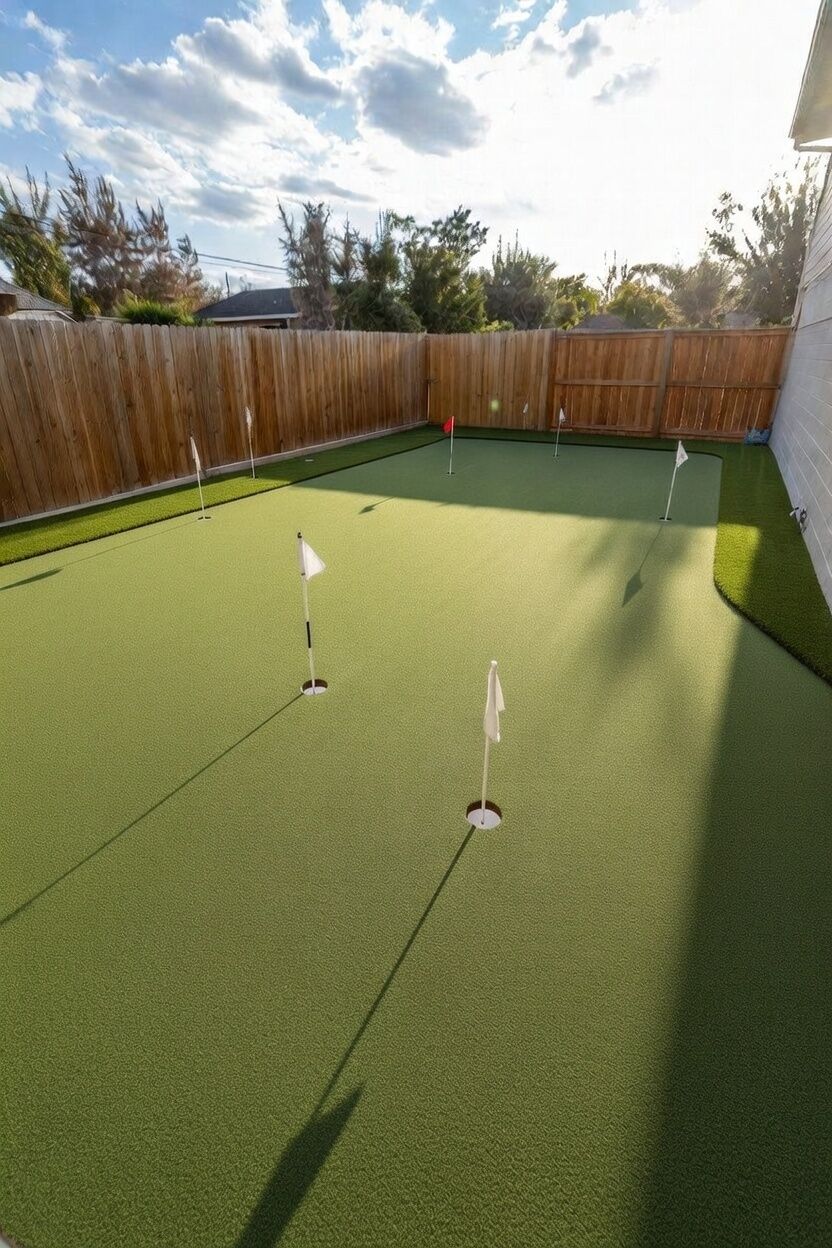
A putting green should support the strokes you want to practice, rather than just fill a spare outline in the yard. Discuss whether the priority is short straight putts, changing breaks or a combination of lines. The putting-green guide describes custom contours, cup positions and fringe choices. Mark where a player stands and how others move past the green. A usable practice area needs more thought than placing a cup in the center of a patch of turf.
Protect future options
Tell the team about later plans even if the first quote covers only one improvement. A future shade structure, cooking area or new path may affect preparation today. Ask which decisions are permanent and which can wait. Phasing works best with a defined endpoint for each stage, not an unfinished edge that is assumed to fit whatever comes next. Keep future ideas labeled as options rather than implied inclusions.
Ball roll starts below the fibers
Contours must be formed in the prepared foundation; the surface follows what is beneath it. Ask how the design balances interest with playable lines and how water leaves the green. Edges should connect cleanly with the surrounding lawn, paving or planting. A long, awkward transition can interrupt both play and maintenance. Review the proposed shape from more than one position in the yard so the practice surface fits the broader outdoor layout rather than becoming an isolated feature.
Use samples as a decision tool
Look at proposed materials beside the surfaces you intend to keep. Color, texture and transitions can read differently outside than on a screen. Samples are useful for narrowing preferences, but they do not demonstrate the base preparation or drainage beneath a finished installation. Ask both questions: how will this look in the setting, and what construction is needed for it to function as intended?
Keep performance expectations specific
A putting product is not the same surface as a general residential lawn. Talk about the intended feel and speed using samples and the team's guidance, without assuming a backyard installation duplicates a particular golf course. Leaves and debris affect play and need removal; care advice should match the selected surface. If chipping or other practice is proposed, discuss the available space and surrounding property first. Do not assume every green layout is suitable for every golf activity.
Related decisions in Woodstock
Use these guides to explore the interfaces around the main project. Related work is not automatically included in a quote.
Clear answers before you start
Questions worth asking
Can a putting green share the yard with other activities?
It can be considered as part of a broader layout, but the routes around it matter. Show seating, pet access and any proposed practice position during design. The green and its fringe should have a clear relationship with neighboring surfaces.
Why discuss access before a Woodstock project is priced?
The route to the work area influences preparation and material handling. Gate width, stairs and tight turns are useful details for the assessment. Supplying them early helps the proposal reflect the property rather than an idealized open work site.
What should the putting greens proposal explain?
Ask for the working area, preparation, selected materials and the transitions to existing features. For this service, pay particular attention to practice lines and the space around the green. Confirm exclusions and any related work before comparing a final price.
How does Woodstock's location affect the design?
Woodstock is in Cherokee County. Approximately 7.9 miles northeast of Kennesaw in a straight line. Those geographic facts do not describe the ground at your address. Site access, water movement and intended use still need assessment before a design is chosen.
Let’s make a practical plan
Tell us what you want your space to do.
Bring your questions, a few photographs and a rough outline. Start with an estimate, or contact Lawn Logic Turf to discuss the next step.
Prefer to talk? (706) 701-8873
Service basis: Putting Greens guide. Local reference: Woodstock site guide. Coordinates: U.S. Census 2020 Gazetteer. Distances use city internal points, not road routes. Turf product reference: SGW; see LawnLogic’s published product information. The 15-Year Platinum Promise is a turf warranty; confirm applicable terms for your product and scope, not unrelated construction.