Design the connections
Outdoor improvements feel more coherent when their connections are planned as carefully as their centerpieces. For a Roswell project, examine the path between seating, lawn and any play or cooking area. A collection of attractive features can still feel awkward if the route between them is narrow or interrupts another activity. Start with the movement through the space, then choose the materials that support it.
Your Roswell project brief
Draw the doors that open toward the yard and show where chairs, tables or portable equipment sit during normal use. Identify the transition that needs the most attention: a muddy step, an abrupt edge or an inconvenient detour. These are examples to check, not claims about your property. A focused brief gives the design conversation something more useful than a list of products.
A practical check before design
Trace one complete journey through the future space, including the return trip. Note whether someone carrying food or equipment would cross an active area or squeeze past seating. Use the same drawing to compare layout alternatives. The exercise is about the relationship between uses, not adding extra features. A simpler connection may improve the plan more than another separate destination in the yard.
Keep performance expectations specific
A putting product is not the same surface as a general residential lawn. Talk about the intended feel and speed using samples and the team's guidance, without assuming a backyard installation duplicates a particular golf course. Leaves and debris affect play and need removal; care advice should match the selected surface. If chipping or other practice is proposed, discuss the available space and surrounding property first. Do not assume every green layout is suitable for every golf activity.
Compare a complete scope
Two proposals are difficult to compare when one includes preparation and the other describes only the finish. Ask what is being removed, what is being retained and how the new work meets it. Identify disposal, access protection and surface restoration where relevant. A clear list of inclusions and exclusions is more useful than a headline price without dimensions. Keep optional additions separate so the essential work remains visible.
Choose the practice before the shape
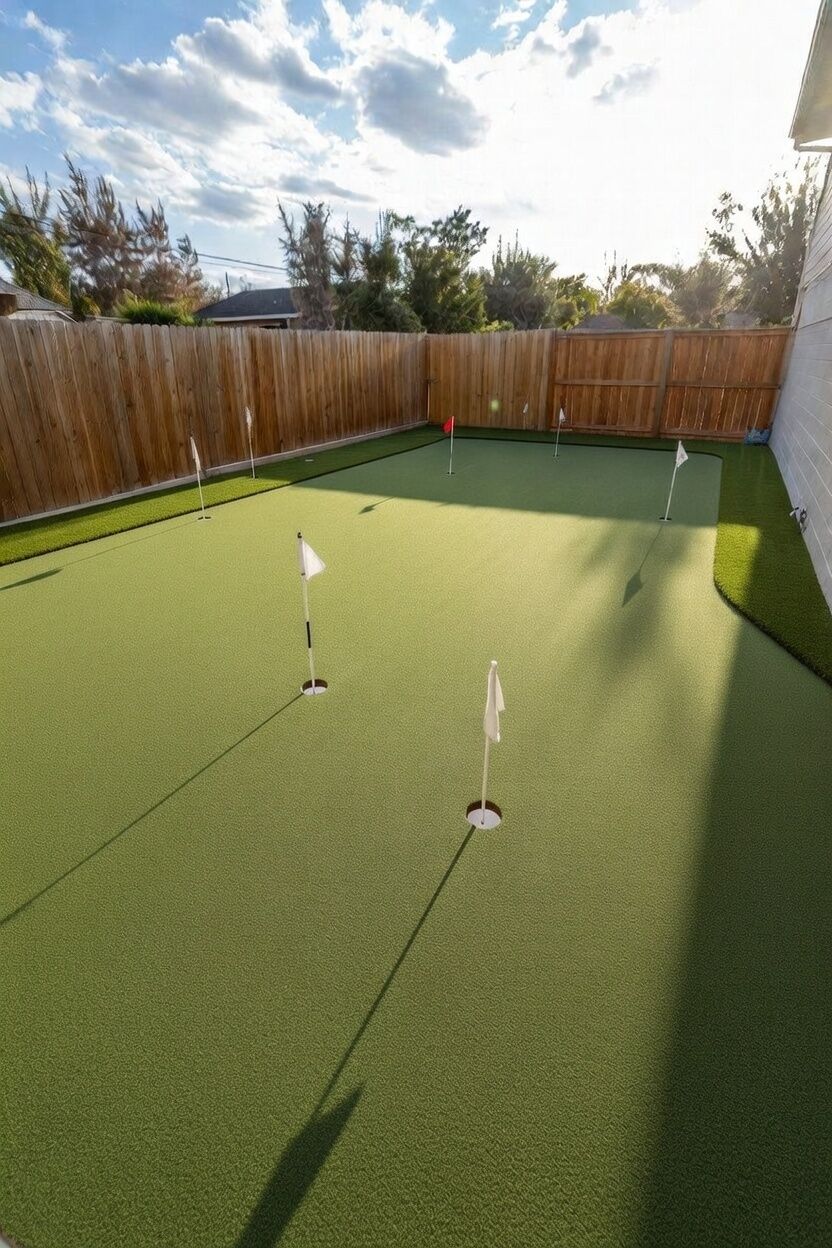
A putting green should support the strokes you want to practice, rather than just fill a spare outline in the yard. Discuss whether the priority is short straight putts, changing breaks or a combination of lines. The putting-green guide describes custom contours, cup positions and fringe choices. Mark where a player stands and how others move past the green. A usable practice area needs more thought than placing a cup in the center of a patch of turf.
Protect future options
Tell the team about later plans even if the first quote covers only one improvement. A future shade structure, cooking area or new path may affect preparation today. Ask which decisions are permanent and which can wait. Phasing works best with a defined endpoint for each stage, not an unfinished edge that is assumed to fit whatever comes next. Keep future ideas labeled as options rather than implied inclusions.
Ball roll starts below the fibers
Contours must be formed in the prepared foundation; the surface follows what is beneath it. Ask how the design balances interest with playable lines and how water leaves the green. Edges should connect cleanly with the surrounding lawn, paving or planting. A long, awkward transition can interrupt both play and maintenance. Review the proposed shape from more than one position in the yard so the practice surface fits the broader outdoor layout rather than becoming an isolated feature.
Related decisions in Roswell
Use these guides to explore the interfaces around the main project. Related work is not automatically included in a quote.
Clear answers before you start
Questions worth asking
Can a putting green share the yard with other activities?
It can be considered as part of a broader layout, but the routes around it matter. Show seating, pet access and any proposed practice position during design. The green and its fringe should have a clear relationship with neighboring surfaces.
How can a Roswell plan avoid disconnected improvements?
Show the team the whole outdoor area even if only one phase is being built. Discuss how a future patio, lawn or shade element would connect. The first phase should not close off the route or drainage needed by the next one.
What should the putting greens proposal explain?
Ask for the working area, preparation, selected materials and the transitions to existing features. For this service, pay particular attention to practice lines and the space around the green. Confirm exclusions and any related work before comparing a final price.
How does Roswell's location affect the design?
Roswell is in Fulton County. Approximately 15.3 miles east of Kennesaw in a straight line. Those geographic facts do not describe the ground at your address. Site access, water movement and intended use still need assessment before a design is chosen.
Let’s make a practical plan
Tell us what you want your space to do.
Bring your questions, a few photographs and a rough outline. Start with an estimate, or contact Lawn Logic Turf to discuss the next step.
Prefer to talk? (706) 701-8873
Service basis: Putting Greens guide. Local reference: Roswell site guide. Coordinates: U.S. Census 2020 Gazetteer. Distances use city internal points, not road routes. Turf product reference: SGW; see LawnLogic’s published product information. The 15-Year Platinum Promise is a turf warranty; confirm applicable terms for your product and scope, not unrelated construction.