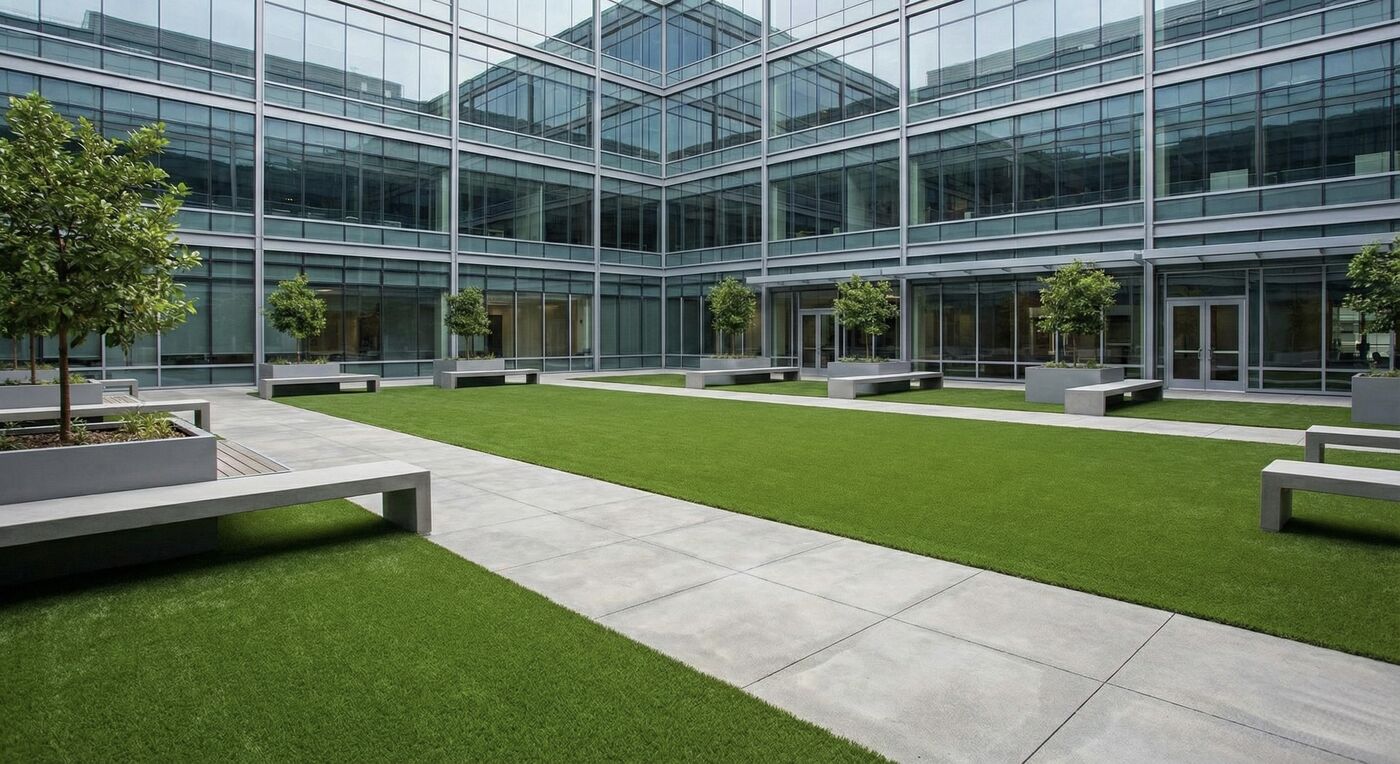
Preserve Existing Surfaces During Turf Installation
For your Candler-McAfee project, sketch the intended working area and identify all existing structures, walkways, and hardscapes to be retained. Mark boundaries clearly and note any features that must remain untouched during construction. Discuss access points with the installer to avoid unintended damage. Photograph retained features before work begins. Confirm location of utility lines and ensure markings are visible. This preparation supports a smooth installation while safeguarding what stays in place.
Your Candler-McAfee project brief
Review site plans carefully to locate permanent fixtures such as patios, retaining walls, or fencing that must remain. Confirm dimensions and elevations where turf meets existing surfaces. Take dated, high-resolution photos of these areas for records. Clarify how edges will be finished near non-turf elements. Verify gate placement aligns with new layout and doesn’t interfere with retained features. Ensure the installer understands which zones require extra care near boundaries. This helps prevent accidental removal or displacement during turf delivery and installation.
A practical check before design
Mark retained features with temporary flags or paint before installation begins, photograph all protected zones from multiple angles, install edge restraints or padding along contact lines to absorb shifting, coordinate with crew to avoid heavy equipment near sensitive surfaces, verify gate clearances and swing paths do not conflict with turf edges, and conduct a walkthrough with the installer to confirm no unintended contact will occur during preparation or laying processes.
Commercial Turf Planning for Candler-McAfee Projects
For your Candler-McAfee project, sketch the intended working area and note all existing hardscape features such as sidewalks, retaining walls, and paved surfaces to ensure they remain undisturbed during preparation. Identify where foot traffic and vehicle access converge, especially near entrances and service zones, to assess wear patterns and potential bottlenecks. Take clear, well-lit photographs of the space from multiple angles, focusing on transitions between surfaces and any irregularities in grade or alignment. Consider how visitors will move through the space—where queues might form, where seating or signage could be placed, and how equipment or supplies will be staged. Ask whether the maintenance routine includes rolling, brushing, or rinsing, and how those activities fit into daily operations. Compare material options by reviewing samples side-by-side under similar lighting, checking for texture consistency, backing stability, and drainage behavior. Prepare questions about long-term layout flexibility, such as how future additions or reconfigurations might affect the installation. This outline exercise helps clarify goals before finalizing the proposal.
Plan the handover, not just the opening day
A lower-mowing landscape still requires an operating routine. Establish who removes debris, checks high-use routes and follows the selected product's care guidance. Ask how furniture, events or recurring traffic affect the maintenance plan. Separate the installed work from ongoing services in the proposal. A clear handover gives the property team a way to look after the surface and identify issues, instead of relying on a broad promise that artificial turf needs no attention.
Think about a hot afternoon
Georgia heat is already discussed throughout the site's turf guidance. Consider when you use the outdoor area and where shade is available. Manufactured surfaces are not a promise of cool barefoot conditions in direct sun. Discuss product choice, shade and everyday supervision where children or animals use the space. Visiting the proposed area at different times can give the design conversation better information than a single morning photograph.
Start with the operating requirements
A commercial turf brief should explain who uses the area, when access is busiest and who looks after it. An office frontage, shared courtyard and high-traffic gathering space have different priorities. The existing commercial service page discusses appearance, durability and maintenance. Define the working purpose before comparing products. Include deliveries, movable furniture and any repeated routes, because the places that receive the most wear may not be the largest parts of the landscaped area.
Use samples as a decision tool
Look at proposed materials beside the surfaces you intend to keep. Color, texture and transitions can read differently outside than on a screen. Samples are useful for narrowing preferences, but they do not demonstrate the base preparation or drainage beneath a finished installation. Ask both questions: how will this look in the setting, and what construction is needed for it to function as intended?
Make transitions part of the scope
Entrances, paths and boundaries connect the turf with the rest of the property. Review those interfaces with the operator rather than treating the grass outline as the only design decision. Surface levels, drainage and secure edges need attention wherever people move between materials. Discuss any site rules, access obligations or approvals with the relevant property representatives. This guide does not certify accessibility or regulatory compliance; the actual site and intended use need appropriate project-specific review.
Related decisions in Candler-McAfee
Use these guides to explore the interfaces around the main project. Related work is not automatically included in a quote.
Clear answers before you start
Questions worth asking
What information should a commercial property manager provide?
Bring an outline of the area, typical traffic patterns, access restrictions and the maintenance responsibilities after installation. Identify the person who can approve the scope. Product selection is easier when the operating requirements are clear.
How should adjacent surfaces be shielded during artificial turf installation?
Begin by physically isolating retained features using temporary barriers like edge restraints or protective boards placed flush against the installation zone. Secure these barriers to prevent movement during prep work. Document the interface points with photos before any substrate work begins. Confirm with the installer how edging will be handled near each protected surface to avoid vibration damage or material overlap. Ensure access routes avoid pressure points on existing installations. Final cleanup should include a joint inspection of all retained elements to verify integrity.
What should the commercial turf proposal explain?
Ask for the working area, preparation, selected materials and the transitions to existing features. For this service, pay particular attention to visitor routes and the operator's maintenance plan. Confirm exclusions and any related work before comparing a final price.
How does Candler-McAfee's location affect the design?
Candler-McAfee is in DeKalb County. Approximately 28.8 miles southeast of Kennesaw in a straight line. Those geographic facts do not describe the ground at your address. Site access, water movement and intended use still need assessment before a design is chosen.
Let’s make a practical plan
Tell us what you want your space to do.
Bring your questions, a few photographs and a rough outline. Start with an estimate, or contact Lawn Logic Turf to discuss the next step.
Prefer to talk? (706) 701-8873
Service basis: Commercial Turf guide. Coordinates: U.S. Census 2020 Gazetteer. Distances use city internal points, not road routes. Turf product reference: SGW; see LawnLogic’s published product information. The 15-Year Platinum Promise is a turf warranty; confirm applicable terms for your product and scope, not unrelated construction.