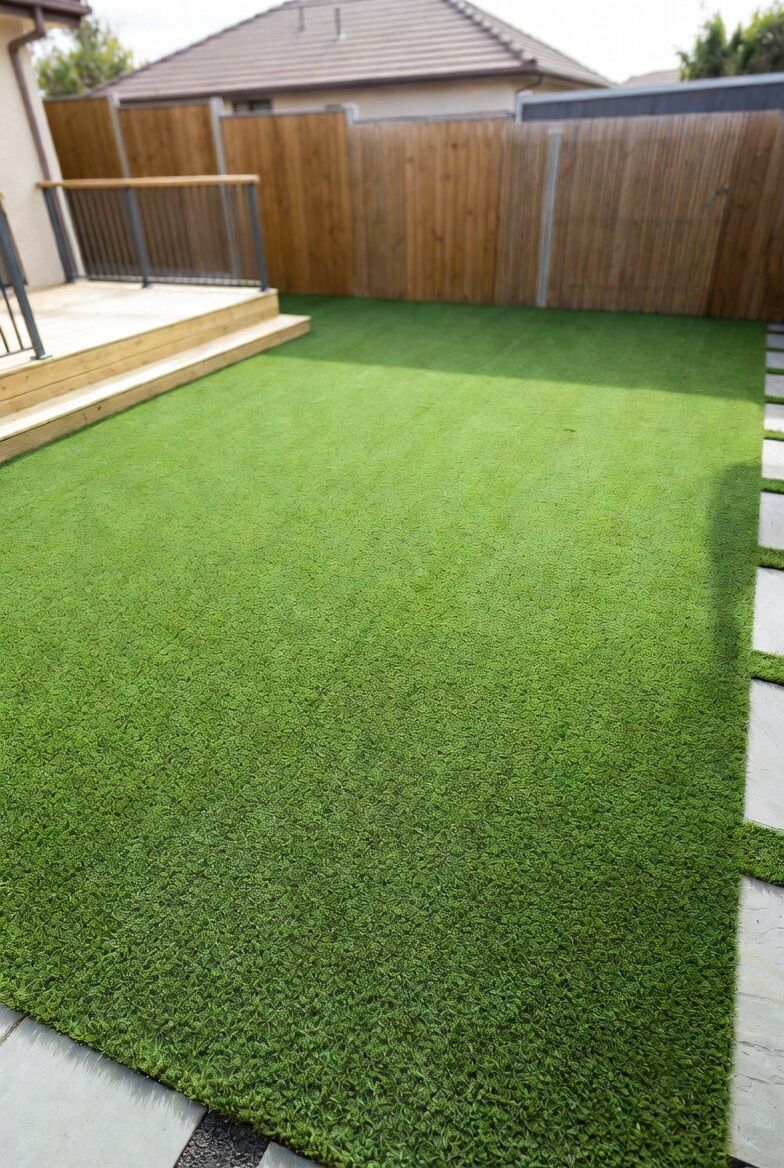
Preserve Existing Surfaces During Turf Installation
For your Candler-McAfee project, sketch the intended working area and identify all existing structures, walkways, and hardscapes to be retained. Mark boundaries clearly and note any features that must remain untouched during construction. Discuss access points with the installer to avoid unintended damage. Photograph retained features before work begins. Confirm location of utility lines and ensure markings are visible. This preparation supports a smooth installation while safeguarding what stays in place.
Bring a more useful brief
Review site plans carefully to locate permanent fixtures such as patios, retaining walls, or fencing that must remain. Confirm dimensions and elevations where turf meets existing surfaces. Take dated, high-resolution photos of these areas for records. Clarify how edges will be finished near non-turf elements. Verify gate placement aligns with new layout and doesn’t interfere with retained features. Ensure the installer understands which zones require extra care near boundaries. This helps prevent accidental removal or displacement during turf delivery and installation.
Test the plan before choosing finishes
Mark retained features with temporary flags or paint before installation begins, photograph all protected zones from multiple angles, install edge restraints or padding along contact lines to absorb shifting, coordinate with crew to avoid heavy equipment near sensitive surfaces, verify gate clearances and swing paths do not conflict with turf edges, and conduct a walkthrough with the installer to confirm no unintended contact will occur during preparation or laying processes.
Choose by purpose
11 ways to shape your outdoor space
Residential Turf
Take clear photographs from multiple angles to capture how light falls on the space and how the area connects to surrounding features. Compare material options by holding samples in the intended location to observe how they look under natural light at different times of day.
Explore residential turf →Pet Turf
Ask yourself how daily routines—like morning walks, feeding times, or evening play—shape the space, and consider where drainage might naturally pool or where runoff redirects toward retained surfaces. Think about where pet barriers or soft edging could guide movement without altering structures.
Explore pet turf →Putting Greens
Compare material options for their visual integration with retained surfaces and how they affect ball roll consistency. Inquire about potential interference between the green’s edges and existing features like fences, posts, or drainage grates.
Explore putting greens →Sport Courts
Pose questions about material resilience, surface transitions, and how different court types handle drainage or slope. Compare surface types by how they align with your intended sport and foot traffic patterns, and discuss how edges or curbing might help define boundaries while protecting surrounding ground.
Explore sport courts →Commercial Turf
Identify where foot traffic and vehicle access converge, especially near entrances and service zones, to assess wear patterns and potential bottlenecks. Take clear, well-lit photographs of the space from multiple angles, focusing on transitions between surfaces and any irregularities in grade or alignment.
Explore commercial turf →Hardscaping
Compare material options side by side for durability, texture, and visual weight, and bring photos of similar installations for reference. Ask whether the plan preserves existing drainage paths and whether new hardscaping will interfere with utility access or service corridors.
Explore hardscaping →Retaining Walls
Compare material options based on appearance, weight, and how they interact with adjacent surfaces. Ask the design team how the wall will manage water behind it, and whether drainage features are included.
Explore retaining walls →Drainage Systems
Think about access points for future inspection or cleaning and whether gates or thresholds might interfere with water movement. Compare material choices not only for appearance but also for permeability and how they influence runoff direction.
Explore drainage systems →Outdoor Kitchens
Ask whether the proposal addresses electrical and gas routing, ventilation clearance, and storage integration without compromising nearby hardscapes. Consider how the design protects adjacent retaining walls, walkways, or foundations from heat, moisture, or wear over time.
Explore outdoor kitchens →Pergolas
When photographing the site, capture wide-angle shots from multiple angles, including close-ups of surfaces near where the pergola will sit—pay special attention to how light hits the area at different times of day. Document gate placements and access points to ensure future movement of materials or equipment won’t be impeded.
Explore pergolas →Outdoor Living Design
Consider how the new surface will connect to adjacent structures—will doors swing freely? Will gates align with walkways without awkward turns? Compare material samples side by side for texture and scale, imagining how they’ll look together. When finalizing activity layouts, think about flow between seated zones, prep areas, and storage access.
Explore outdoor living design →Think about a hot afternoon
Georgia heat is already discussed throughout the site's turf guidance. Consider when you use the outdoor area and where shade is available. Manufactured surfaces are not a promise of cool barefoot conditions in direct sun. Discuss product choice, shade and everyday supervision where children or animals use the space. Visiting the proposed area at different times can give the design conversation better information than a single morning photograph.
Protect future options
Tell the team about later plans even if the first quote covers only one improvement. A future shade structure, cooking area or new path may affect preparation today. Ask which decisions are permanent and which can wait. Phasing works best with a defined endpoint for each stage, not an unfinished edge that is assumed to fit whatever comes next. Keep future ideas labeled as options rather than implied inclusions.
Clear answers before you start
Questions worth asking
How should adjacent surfaces be shielded during artificial turf installation?
Begin by physically isolating retained features using temporary barriers like edge restraints or protective boards placed flush against the installation zone. Secure these barriers to prevent movement during prep work. Document the interface points with photos before any substrate work begins. Confirm with the installer how edging will be handled near each protected surface to avoid vibration damage or material overlap. Ensure access routes avoid pressure points on existing installations. Final cleanup should include a joint inspection of all retained elements to verify integrity.
Which services can I explore in Candler-McAfee?
These guides cover residential turf, pet turf, putting greens, sport courts, commercial turf, hardscaping, retaining walls, drainage systems, outdoor kitchens, pergolas and coordinated outdoor living design. Choose the primary purpose first, then consider related improvements.
Does LawnLogic install natural sod?
No. The published offer statement excludes natural sod, hydroseed, natural-grass installation, fertilization and natural-grass maintenance. These guides focus on artificial turf and the outdoor improvement categories actually listed by LawnLogic.
Is the turf price range a quote for every service?
No. The cost guide's $8–$17 per square foot installed range is for typical artificial turf planning. Walls, kitchens, drainage and other construction need their own scope. An address-specific assessment is needed before a project price is established.
Let’s make a practical plan
Tell us what you want your space to do.
Bring your questions, a few photographs and a rough outline. Start with an estimate, or contact Lawn Logic Turf to discuss the next step.
Prefer to talk? (706) 701-8873
Straight-line distances use U.S. Census 2020 Gazetteer internal points, not driving routes. Service categories follow the published offer statement. No city-wide soil condition or permit rule is assumed.